
Note: I have updated this post in March 2026 after speaking with some family members, including William Halmesco’s granddaughter, who helped me clarify some of the facts here.
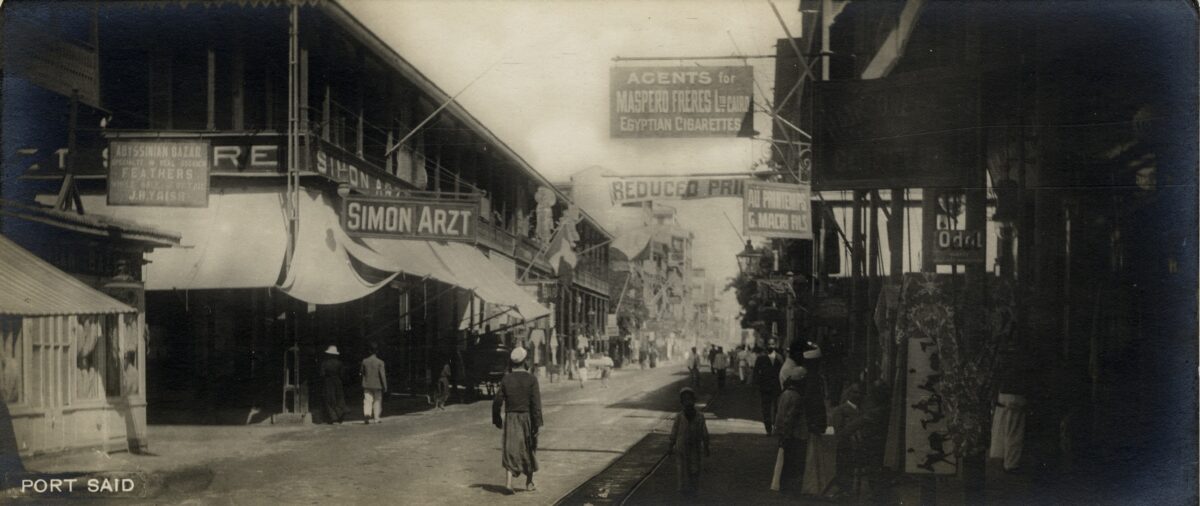
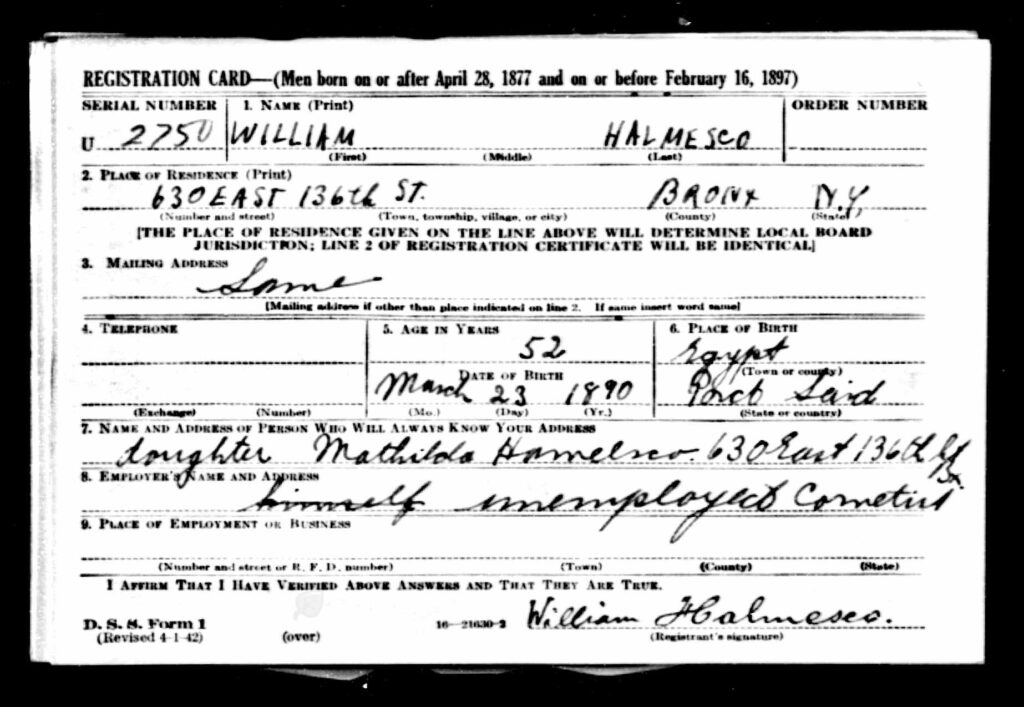
I’m still sorting through many of the unknown families and individuals buried in the two Progressive Musical Benevolent Society cemetery plots, and I came across several intermarried families who don’t fit the usual profile. Rather than coming directly from the Russian Empire to New York City, as did the majority of P.M.B.S. members, they were European Jews of Austrian/Romanian ancestry who were born or who lived extended periods in Egypt during the colonial era, and came to New York during or after the First World War. These were the families of three New York musicians and P.M.B.S. members, Charles Braun (1887–1947), Charles Isaac Rosenberg (1884–1929) and William Halmesco (1890–1952).
I don’t know enough about early 20th century Egypt to really give much context to their lives there. (Although I did take a memorable course in Modern Egyptian History with Paul Sedra at SFU 15 years ago.) I wouldn’t even know where to go looking for documentation of their lives over there. The French-language Cairo newspaper Israël is searchable on jpress from 1922 onwards, and while I did not find any of these family names in it, searches for “musique” and “musicien” brings up plenty of results. One gets the impression of a bustling cultural life between Europe, the long-resident local Jewish community, traveling musicians, and colonization projects in nearby Palestine.
I thought an examination of the lives of these musicians would be an interesting demonstration of the different paths people took to end up as members of the P.M.B.S. in New York.
The families in Egypt
The parents of the Halm(esco) family, Solomon Rosenberg and Annette Halm, may have been born in Romania or Bucovina in the second half of the 19th century, lived in Vienna for a time, and settled in Egypt by the 1890s. Their four known children are Sophia (or Sofica, b.1885), William (b.1890), Bertha (b.1891) and Alexander (b.1894). Sophia was born in Austria-Hungary and the three latter children may have been born in Egypt. (William’s descendants insist that he was not born in Egypt, and that he said he was on U.S. documents later for some unknown reason.)
Solomon Rosenberg was a musician. According to his descendants, he left the family for a younger woman at some point, and so two of his sons renounced his name and went by their mother’s maiden name, Halm. All four children could play music, and the two daughters married musicians. Sophia married Charles Isaac (Yitzchok Chaim) Rosenberg, a violinist from Chernivtsi born in 1884, who was living and working in Egypt. I’m not sure if he was related to Solomon Rosenberg. Bertha married Charles (Chaim) Braun, a bassist born somewhere in Galicia in around 1887, who was likewise working in Egypt. William married Mathilda Meyer, daughter of a German Jewish family long resident in Egypt, and became a cornetist or trumpeter. The youngest sibling Alexander became a clarinetist.
According to the family, the brothers fought in the Ottoman army in the First World War and were interned in a POW camp in Malta. They also said that some of the older relatives spoke Arabic and French (the latter being the language of education available to European Jews there), or German in the case of the Meyer branch of the family.
Life in New York
The earliest among these folks to arrive was Charles Isaac Rosenberg, his wife Sophia & family, who left Alexandria and sailed to New York in the spring of 1915. At some point he joined the Progressive Musical Benevolent Society and started to play as a theatre musician. I’m unsure how he got connected with the P.M.B.S.; perhaps he was related to one of the many other Rosenbergs who were members, or met another member on the job. (The descendants weren’t aware of any other Rosenberg relatives in the Society.) On his WWI registration card he gave his employer as Loew’s Orpheum Theatre on 86th.
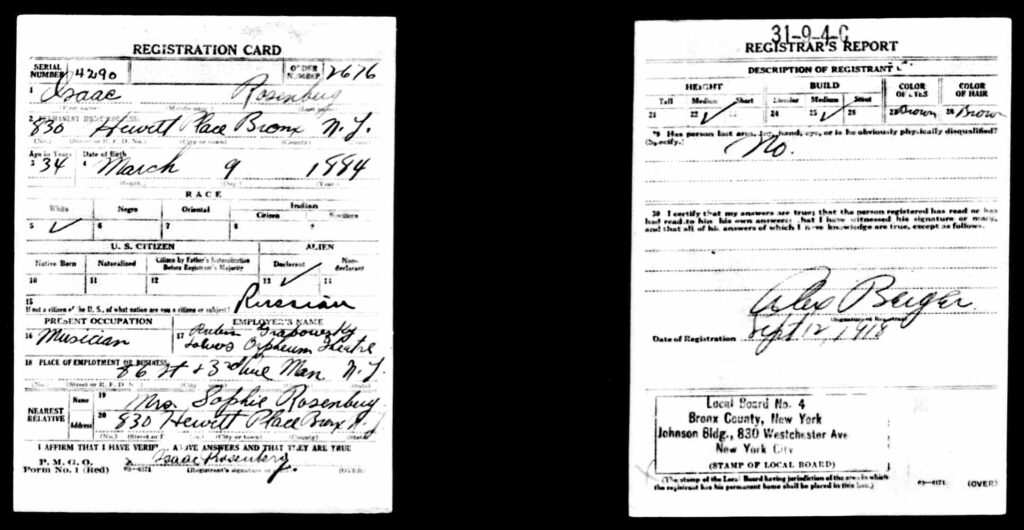
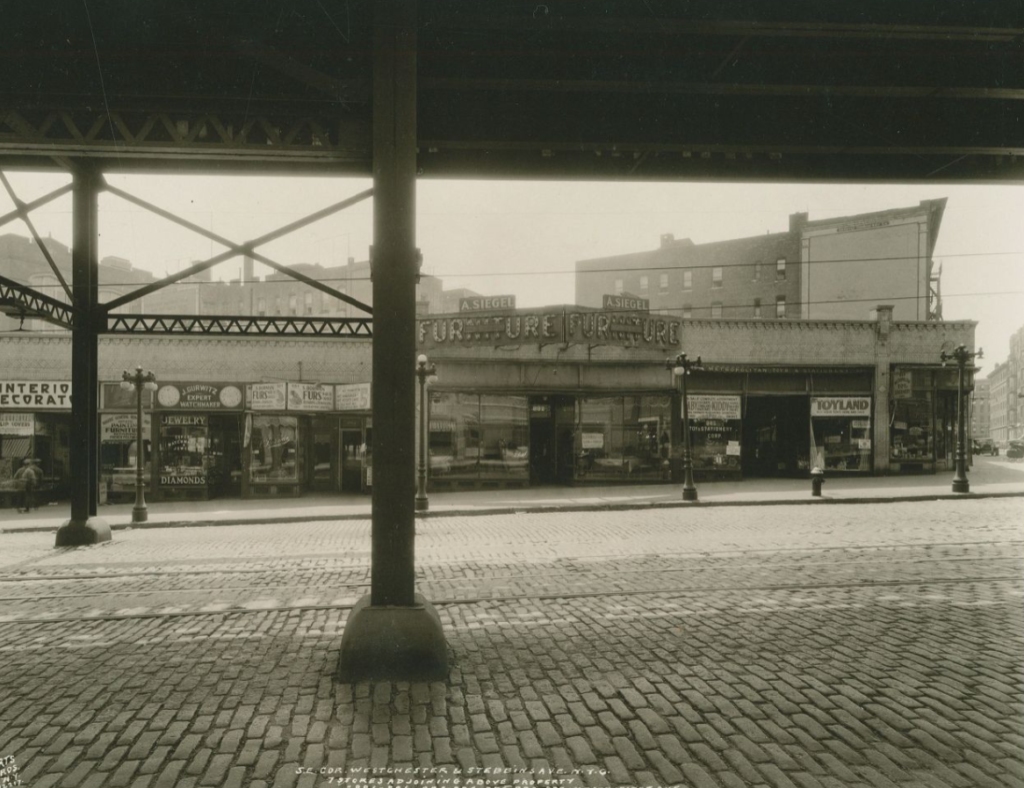
Charles and Sophia, along with daughters Bella (Blanche) and Victoria, settled on Hewitt Place in the Bronx for the first decade of their time in New York. By the time of the 1925 census they were living on 111th in Harlem, and brother-in-law Charles Braun had arrived from Egypt and moved in with them. Bella Rosenberg had turned 18 and was now working as a pianist. According to the family, she worked as a piano teacher and her sister Victoria was also a musician.
Charles Braun’s wife Bertha arrived in October ’25 along with their children Lazare (Lester), Solomon and Leon. Charles joined the musician’s union and the P.M.B.S.; per the union directory, Charles Braun started off as a flautist, but soon switched to playing bass.
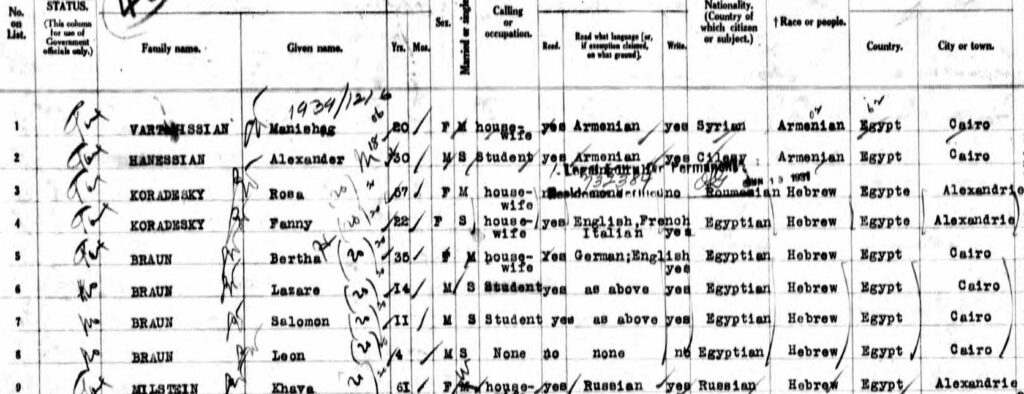
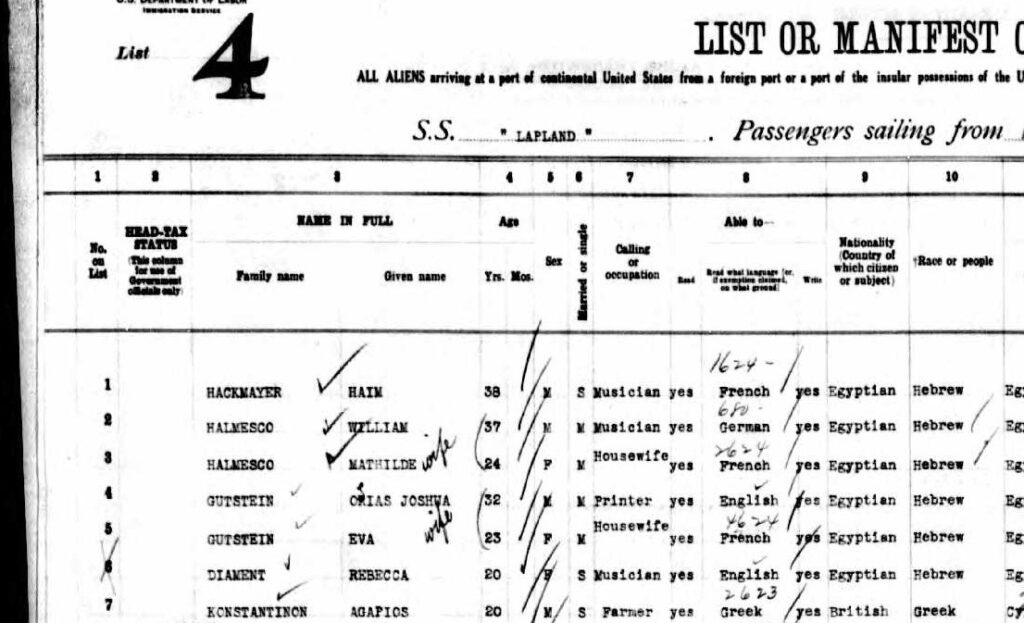
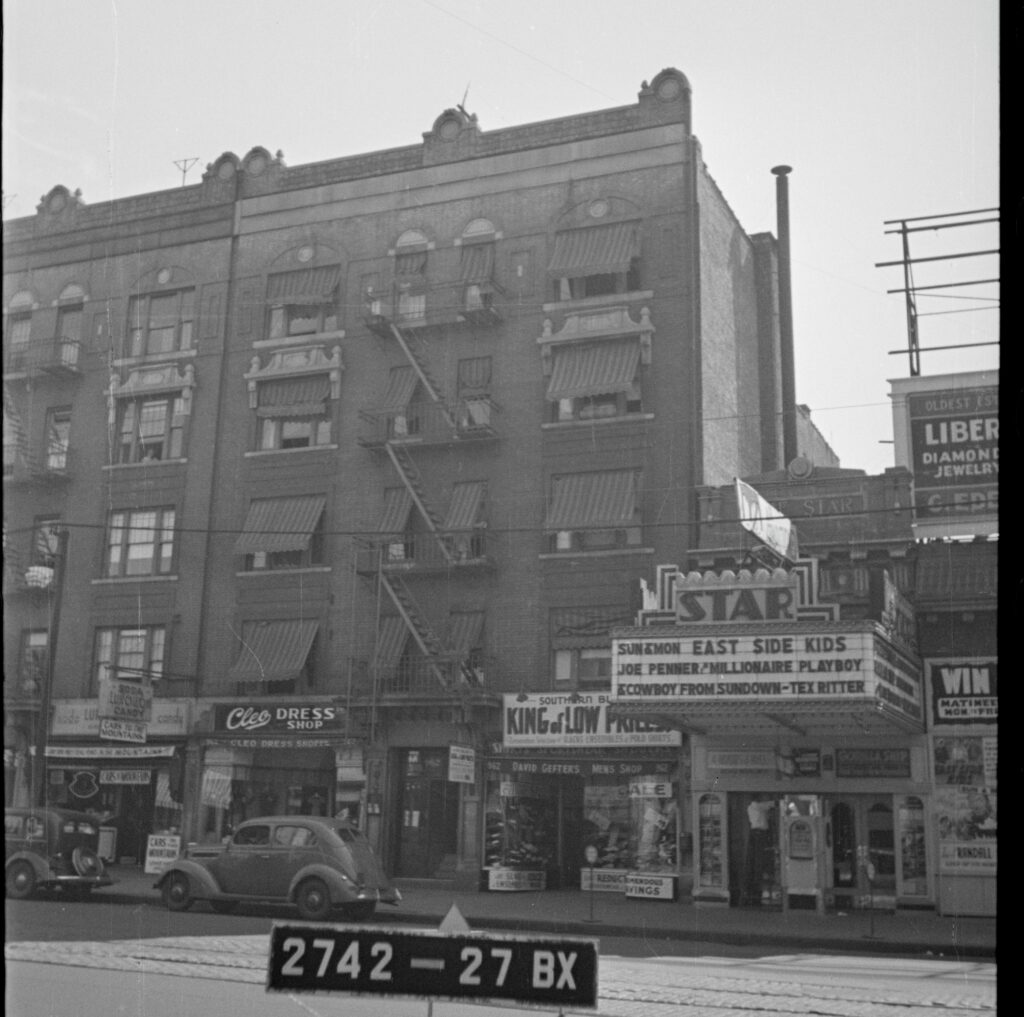
Brother William Halmesco was the next to arrive, leaving Cairo with his wife Mathilda and arriving in New York in March 1927. According to the family, he had changed his name from Halm to Halmesco while working in Egypt, in order to sound more Italian. Before long they had settled on Southern Boulevard in the Bronx; William joined the P.M.B.S. and the musician’s union as a cornetist/trumpeter.
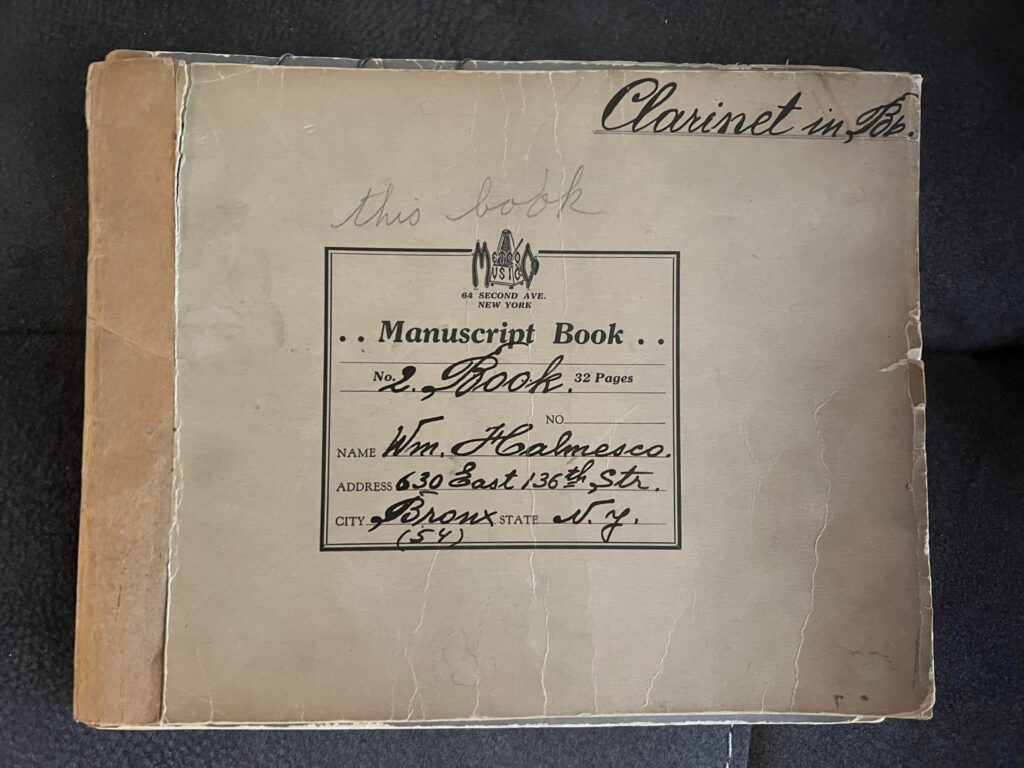
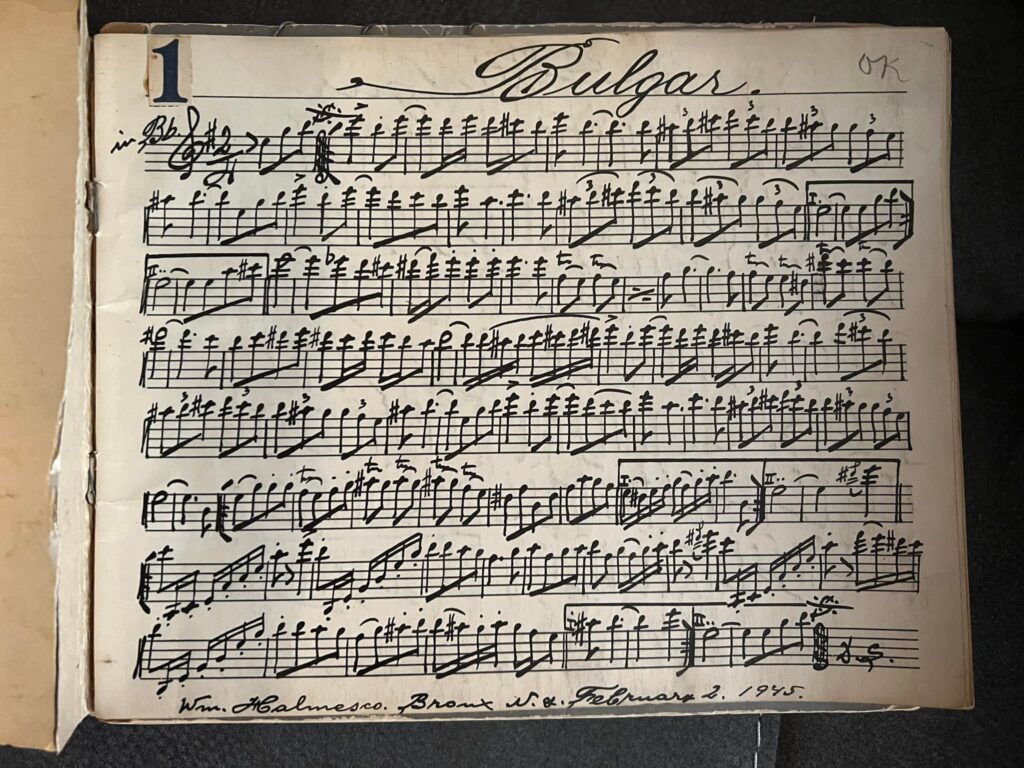
Aside from the membership of all three families in the P.M.B.S., William is the only one who left us evidence of specifically klezmer music activity. Dave Levitt, descendant of two generations of P.M.B.S. members, has an old manuscript from Halmesco which somehow ended up in his grandfather Jack’s possession. The book, written up in 1945, contains bulgars and other klezmer materials. Probably some of them were William’s own compositions, as he was described in a 2006 profile of his daughter in the Staten Island Advance as a “musician and composer.”
William’s granddaughter was surprised to hear of an association between him and klezmer music, saying he was a classical musician above all. But she recognized his handwriting and the address on the manuscript. She wondered if he had been paid to copy it for someone, a way he occasionally supplemented his income.
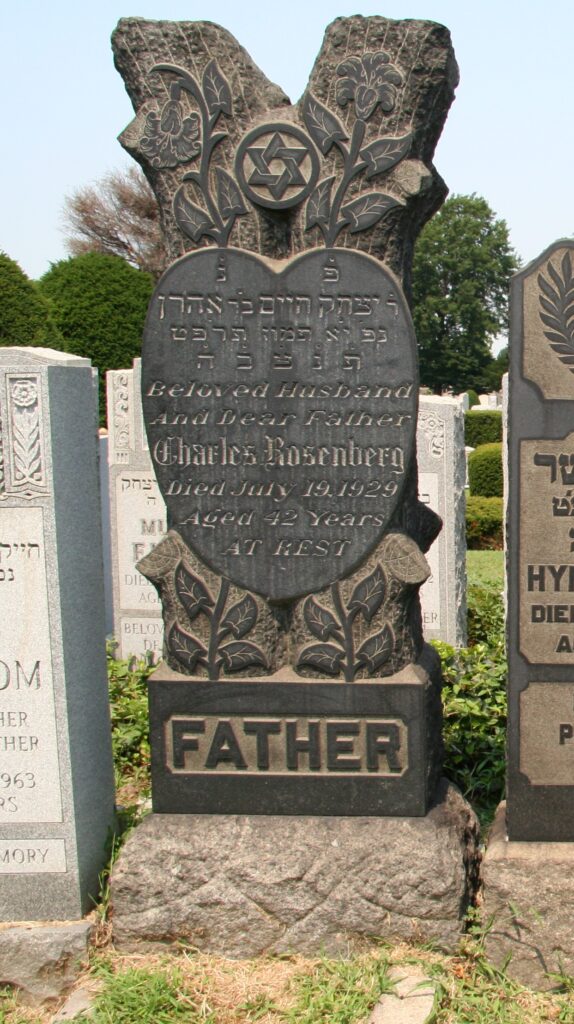
Charles Rosenberg was the first of the musicians to pass away, dying of a burst appendix in 1929. He was buried in the Society’s plot at Mount Hebron Cemetery. His wife Sophie—one of the Halm/Rosenberg sisters, if you recall—died a few years later, in 1935.
William Halmesco’s family was also struck with misfortune, as his wife Mathilda died in 1931 giving birth to their first child. This daughter was named Mathilda (Matty) in honour of her mother, and was sent to live in the Jewish Infants Home of Brooklyn until age 5, when she came back to live with her father. According to a profile of her in the Staten Island Advance in 2006, her father tried for several years to have her learn the violin, but finally gave up when she did not take to it.
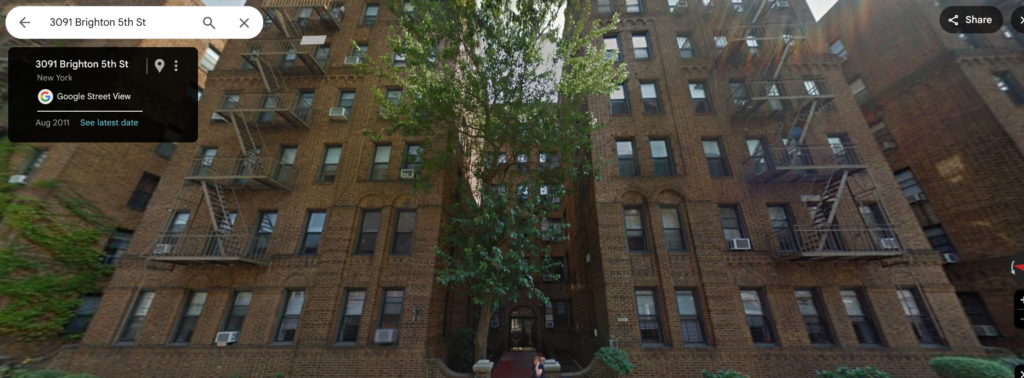
In this era Charles Braun and his sons continued to work as musicians; mostly as bassists, but occasionally as drummers, in night clubs, and in Lester’s case, for the radio station WNEW for some time in the 1940s. The family moved into this newly built building in Brighton Beach, seen below, where a number of musicians seemed to live, per the 1945 local 802 directory, including the klezmer bandleader and cornetist Max Ellenson (1878–19??). I asked the family about this building, and they did remember it and that there had been parties with many musicians there, but didn’t know anything specific about why so many had lived there.

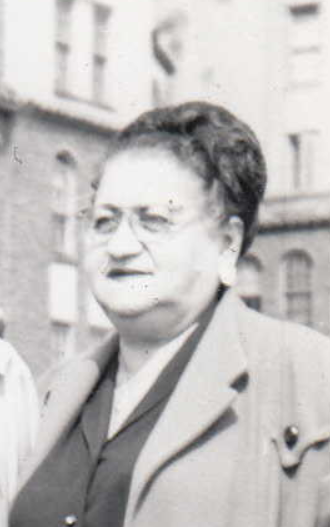
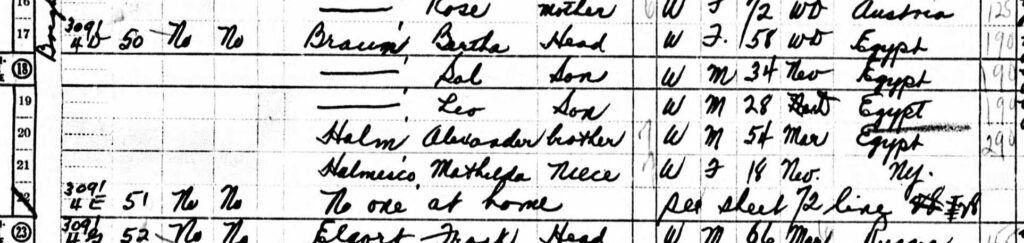
When Charles Braun died in 1947, Bertha’s brother Alexander, who had left Egypt during the period of deteriorating conditions for Jewish residents, and moved in with them, as did Matty Halmesco, as we can see below in the 1950 census. William Halmesco, meanwhile, continued to live in the Bronx as he had since arriving in New York decades earlier. He died in 1952, and was buried in the P.M.B.S. plot at Mount Hebron cemetery alongside fellow cornetist Samuel Blank.
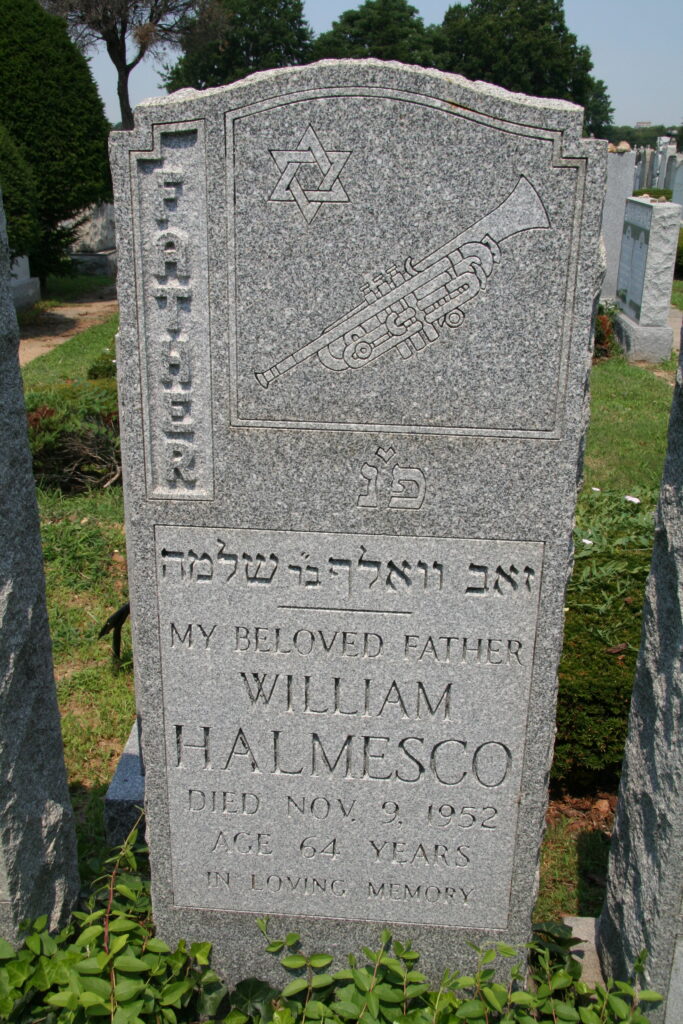
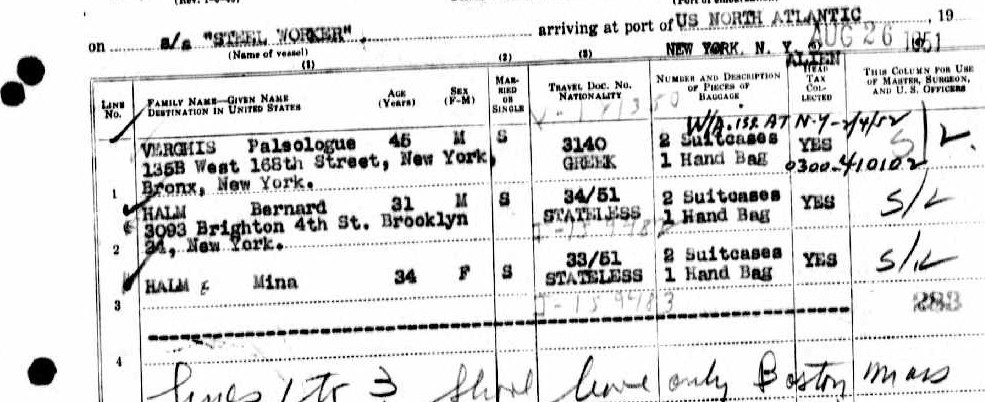
With William gone, Matty got married to her cousin Bernard Halm (1920–1985), Alexander’s son who had arrived from Egypt, in Brooklyn in 1954. Born in Vienna, the family said he played in King Farouk‘s orchestra and left during the process of expulsion or exclusion of Jews from Egypt. They noted that Farouk helped pay for his departure. According to the 2006 profile of Matty, Bernard spoke nine languages and worked as an interpreter in a Manhattan hotel.
According to the descendants, some of the relatives are still in the music business, including William’s great grandson who works as a music director and organist. Thanks to them for all their invaluable information.