
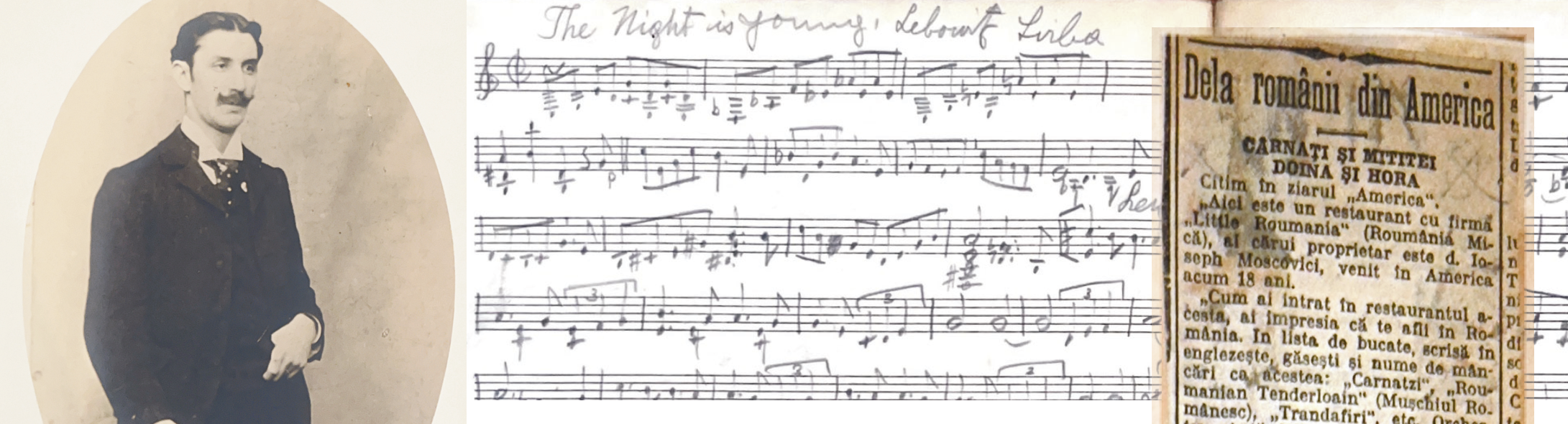
As an amateur cimbalom player and klezmer fan, I’ve long had a soft spot for Joseph Moskowitz (1879–1954), a Romanian-born cimbalist, prolific recording artist, and colourful character from old New York. In editing his Wikipedia page years ago, I noted that his obituary credited him with having composed at least a hundred melodies. Searching for other compositions by him kickstarted my project to request klezmer scores from the Library of Congress, as I noted in my first blog post and this one about Moskowitz scores from the LOC. We also have quite a lot of material recorded by him, including the 40 or so 78rpm recordings and the LP Cymbalom Melodies he made late in life. But obviously a lot of his work had been lost.
That’s why I was very pleased when, in Union Square in Manhattan last spring, Pete Rushefsky sat me down and told me how he had just returned from the D.C. area, where he had spent hours photographing scores and photos from a newly rediscovered box of Moskowitz materials found in a relative’s attic. (Pete is Executive Director of the Center for Traditional Music and Dance, in addition to being a fellow cimbalom player and Moskowitz megafan.) Pete was scrolling through images on his phone, showing me Moskowitz as a young man in Europe, newspaper clippings, and old handwritten music manuscripts. Very exciting!
The materials themselves were donated to the Library of Congress, which is entirely appropriate. But their priorities are not the same as ours—I could imagine a scenario in which none of us outside of the D.C. area ever see them or hear about them again—and so I think it is good that Pete has put up a preliminary access version of his photographs here at josephmoskowitz.org. The collection is not organized or catalogued, beyond broad categories of image type. But it contains so much priceless old music and ephemera. Here are some of my takeaways about the music and music history side of it. I won’t even get into the photos or his handwritten memoir.
1. There is a lot of great unknown klezmer in here
So much great new-old klezmer music has been uncovered in the last decade, be it Sherry Mayrent’s amazing 78 rpm finds, old Russian Empire and Soviet klezmer digitized as part of the Kiselgof-Makonovetsky project, the LOC’s Yiddish American Popular Sheet Music collection, family collections published by people like Dave Levitt and Susan Watts, and so on. We really live in a rich age of rediscovery. I’ve tried to do my part by ordering and making available copyright scores of forgotten material from the LOC, too. We now have access to so much rediscovered music that we don’t need to be sticking to the few dozen tunes known to klezmer revivalists in the 1980s and 1990s. Here at the monthly KlezWest sessions over here in Vancouver, I have been adding pieces by Moskowitz, Israel J. Hochman or Herman S. Shapiro to the usual Brandwein and Tarras tunes we love to play.
This Moskowitz archive is yet another new addition to this era of musical rediscovery. In addition to his restaurant “Muzak” and other eclectic materials, we can find around a hundred klezmer/Romanian pieces. It’s hard to get a clear count, because some have been photographed more than once, and others appear several times in the collection in different drafts or arrangements. If I had to estimate, I would say there are about 40 sârbas (sirbas), 30 horas of various kinds, 30 chusids (basically their name for a freylekhs) and 10 bulgars. There are also waltzes, tangos, doinas, and many untitled pieces that would have to be played to be categorized. Some are known to us from his old recordings, but most are not.
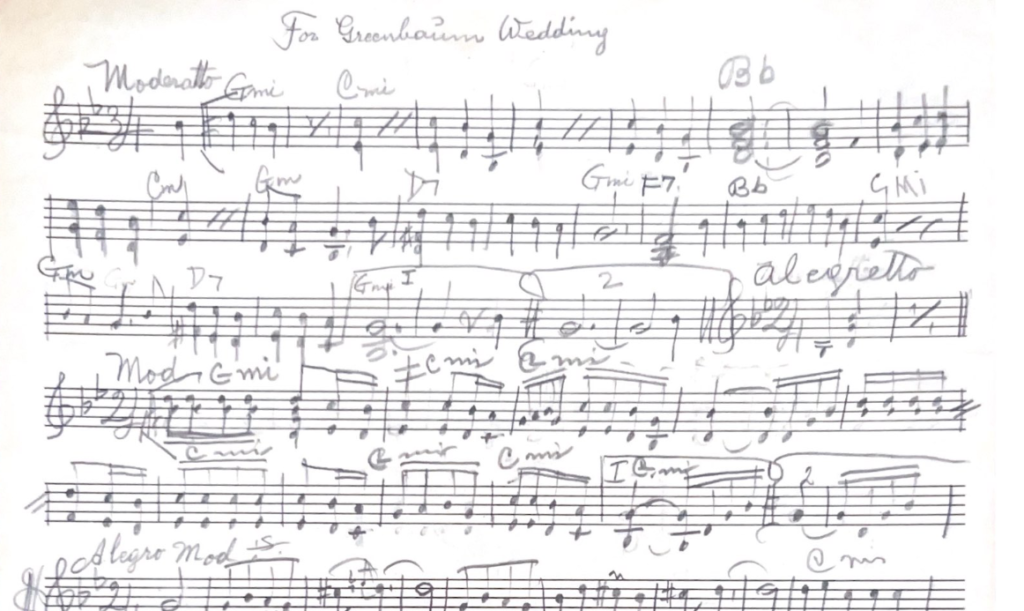
I tried to make sense of it in this spreadsheet last year, and I’ve gone back to update it a bit recently as the collection has been put online. I will probably continue to add notes as I play the scores and observe new things.
2. Moskowitz’s Jewish repertoire was extremely Romanian
Or should it say Moskowitz’s Romanian repertoire was extremely Jewish?
I’ve been working on a talk about golden age New York klezmer composition and repertoire to give at Klezcadia in June. It made me think once again about the way in which the music industry apparently worked to homogenize old New York klezmer into a common sound. Back in the first decades of the 20th century, New York klezmer musicians from diverse regions of origin played together in orchestras for hire and the idea of klezmer we know from old recordings was created. This sound was brassy, clarinet-centric and tended towards music from Southern Ukraine and Moldova, full of bulgars, freylekhs and zhoks. But other artists seem to have had their niche outside this general trend, and Moskowitz was one of them. Although I’m sure he was familiar with their music and played it, his focus here is above all on sârbas, chusids and horas, music from his home region of Romania, filtered through his eclectic tastes picked up elsewhere in Europe and America. Contributing to the tally of sârbas are pieces by Max Leibowitz (who was also born in Romania) and others.
Remember, Moskowitz owned a series of Romanian-style restaurants in New York and could play whatever he wanted to please the customers. (To evoke the scene, here is an uncredited appearance in an old Yiddish film.) Although he clearly played weddings and concert stages as well, his main gig for decades was a place he could cultivate a highly specific niche repertoire.
Moskowitz’s recorded output contains plenty of this Romanian-Jewish crossover repertoire, giving us lots of evidence for how he would have performed these types of pieces, and how he would have had them accompanied by a pianist or orchestra. (DAHR lists 6 pieces titled sirba/sarba, but in a few other places he plays untitled ones following a doina or other melody.) Add to this old Romanian music recordings and the output of other Romanian-Jewish klezmer musicians like Abe Schwartz and Max Leibowitz, or Ukraine-Romania borderlands musicians like Israel J. Hochman and Al Glaser, and we have a lot to work with in bringing these scores back to life.
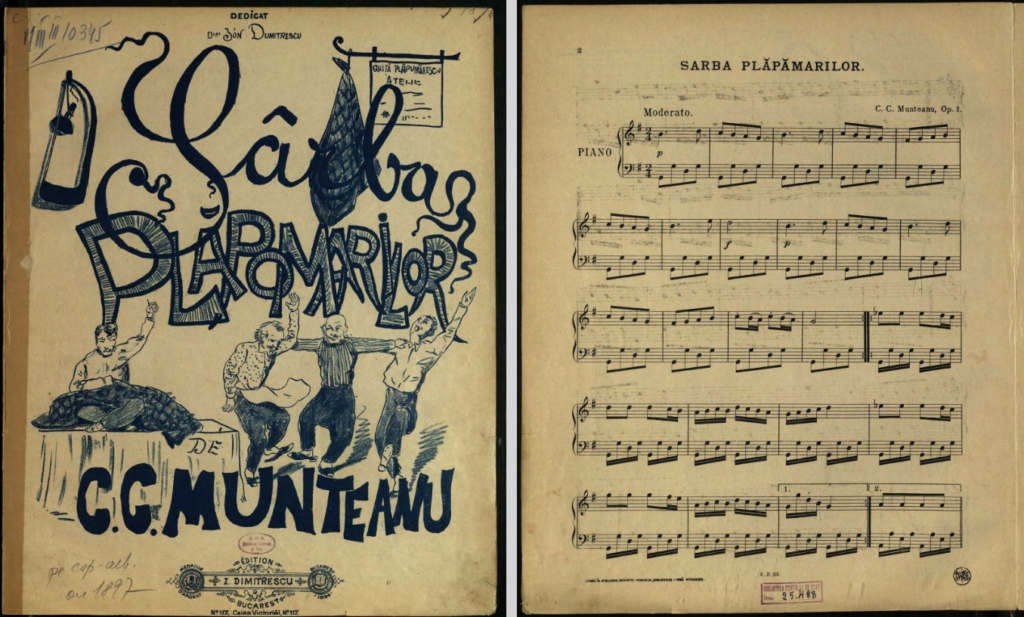
To step out of the old Lower East Side Jewish world for a bit, all of this repertoire is a reflection of the musical milieu Moskowitz grew up with in turn of the century Romania, where many such pieces were being composed and published. (Take a look at the Romanian National Library’s digital collection, and do a search for sirba, sarba, hora etc.) A few of his recordings, like Nunta Taraneasca (1916) are more straightforward performances of those kinds of published folk music suites. Someone with a finer ear for this music could probably do a fascinating study on Moskowitz’s compositions in this style and what differentiates them, if anything, from the pieces from back home.
3. The collection is a total mess
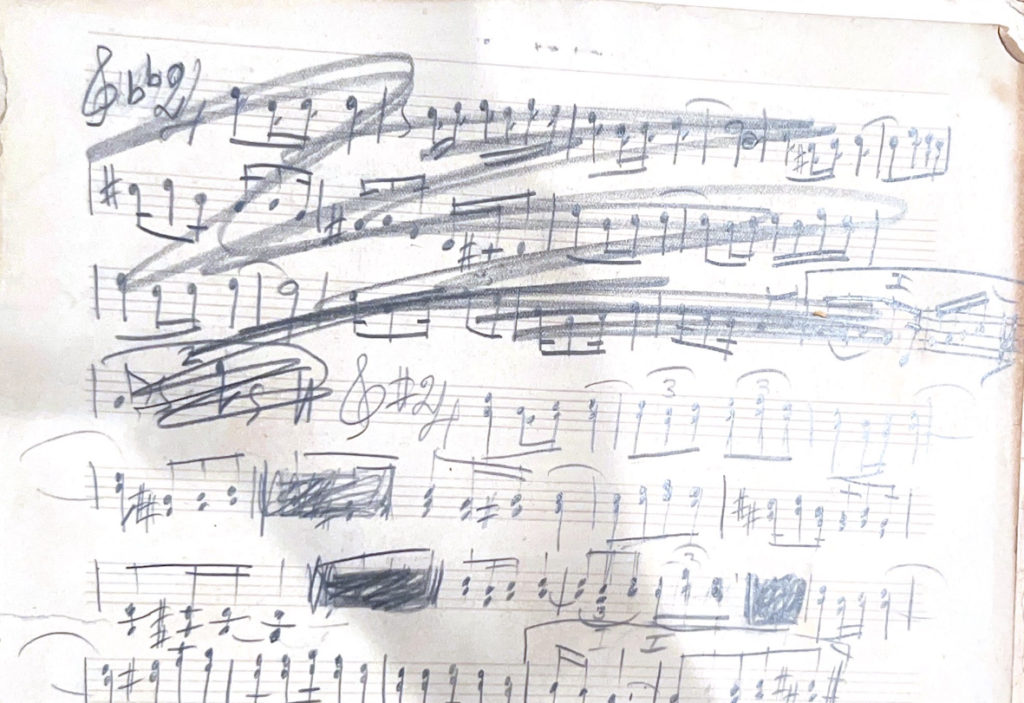
This is not a knock on Pete, who graciously photographed and made available this collection for all of us to access. But there’s no denying that, from an archival or casual use standpoint, the archive is still in a relatively unstructured and cluttered state. Contents have not been fully assessed, listed, or even cleaned up from the original photographing session. There are duplicates and junk files. We just have to work with that for now. Hopefully over time an effort will be made to catalogue and structure this archive into something a bit more usable, especially now that a professional archive (the LOC) holds the originals.
But there is another way in which it is a beautiful mess: they are just things Moskowitz collected over the years and threw into a box. Compare Dave Tarras’ intentionally curated collection he donated to YIVO. That collection does not contain messy drafts, notes to himself, abandoned materials and so on. In Moskowitz’s messy box of scores we can see on the page just how he developed some of his pieces, either by taking a snippet and expanding it into a hora, or by writing and rewriting a piece, or by the way his favourite compositions appear several times in different arrangements.
4. We can see Moskowitz’s musical community
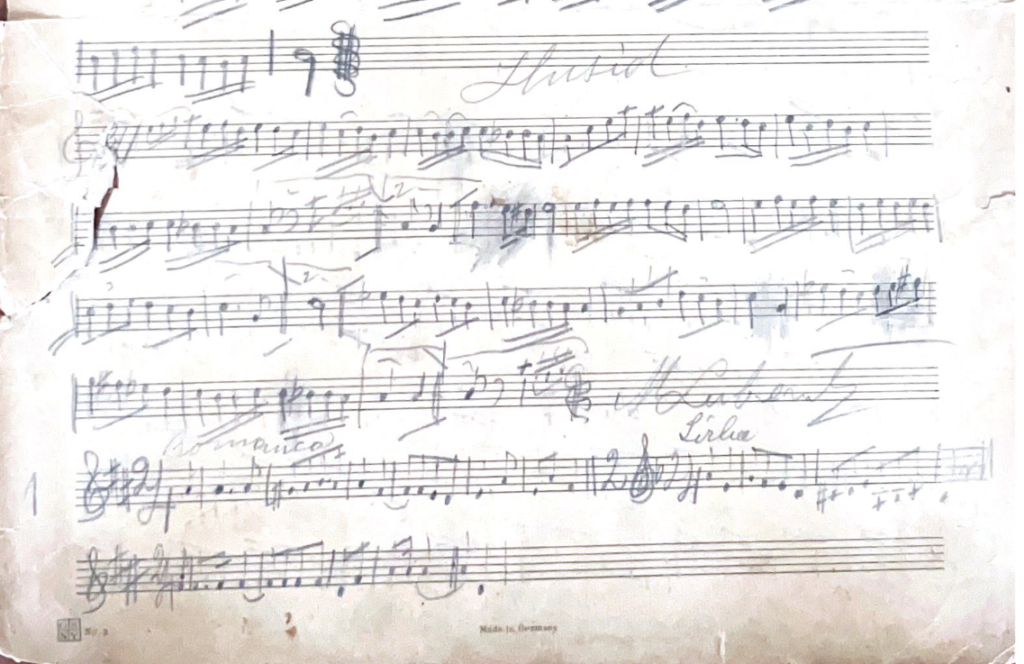
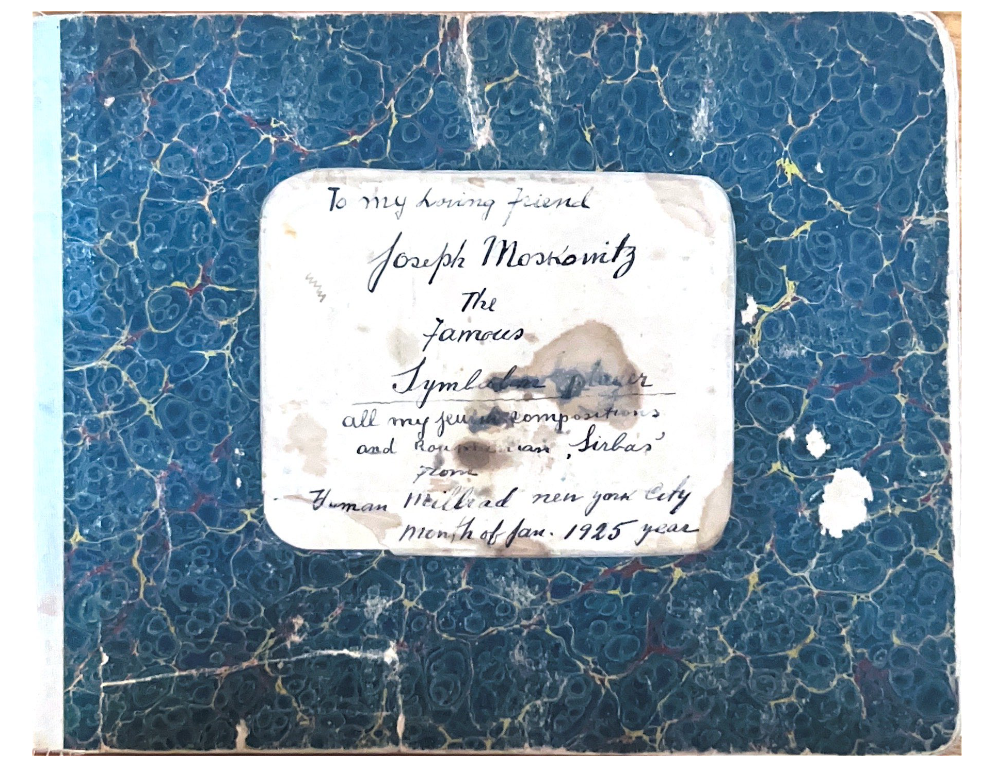
As someone trying to do historical research into the relatively closed, undocumented and forgotten world of old New York klezmer, these papers are a great glimpse into who Moskowitz was playing with and for, who he hired and who hired him. We see signatures by other musicians, instructions for them by Moskowitz, and his notes to his copyists. We see performance instructions for himself or his pianists, including occasionally customer requests for a particular piece.
Compare it to the Tarras archive at YIVO which I mentioned above. That collection is relatively tidy, donated by Tarras who curated it to say “this is who I was, this was my music.” We see almost nothing of the many other people involved in his musicmaking, and the scores are the final product of a process of drafting and refinement. Not so for Moskowitz’s accidental archive.
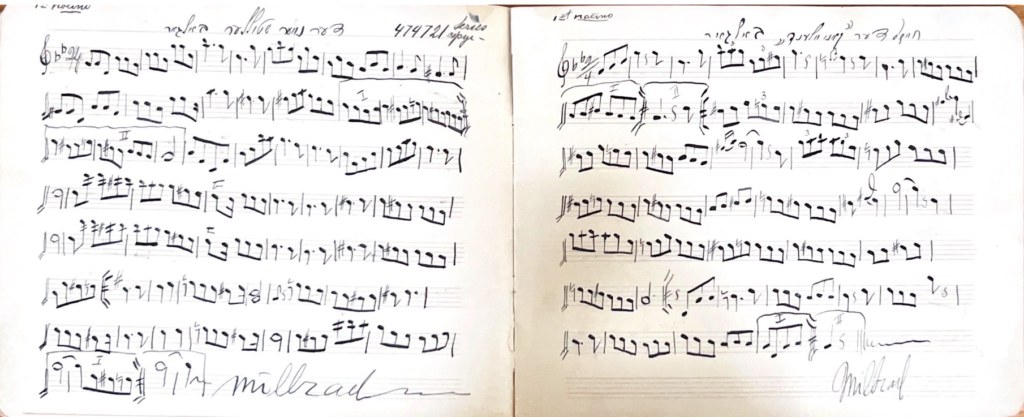
And then there are the names of old New York klezmer people, known and unknown. The biggest set is this booklet sent to him by Chaim “Hymie” Millrad (1882–1971), a klezmer bassist & composer born in Mogilev. This set of 10 bulgars and chosids contains most of the pieces Millrad copyrighted with the LOC, but also a few others.
The next most common name is Max Leibowitz, who I’ve mentioned above a few times already, fellow Romanian immigrant musician and recording artist who himself tried to get into the Romanian-Jewish steakhouse restaurant business as well. A few pieces initialed M.L. in the collection might be him too. And we find pieces by minor figures from that era, like the Galician-born violinist-bandleaders Sigmund Goldring (1888–1947) and Beresh Katz (1879–1964), or Polish-born vaudeville musician Nat Kornspan (1878–1949). Other names on klezmer pieces are unknown to me: Hershkowitz, Schuster, Himmelbrand and Gold. Even the point of the names is not always clear, is it saying this person composed it, or he was playing it with this person, or the person requested it? And so on.
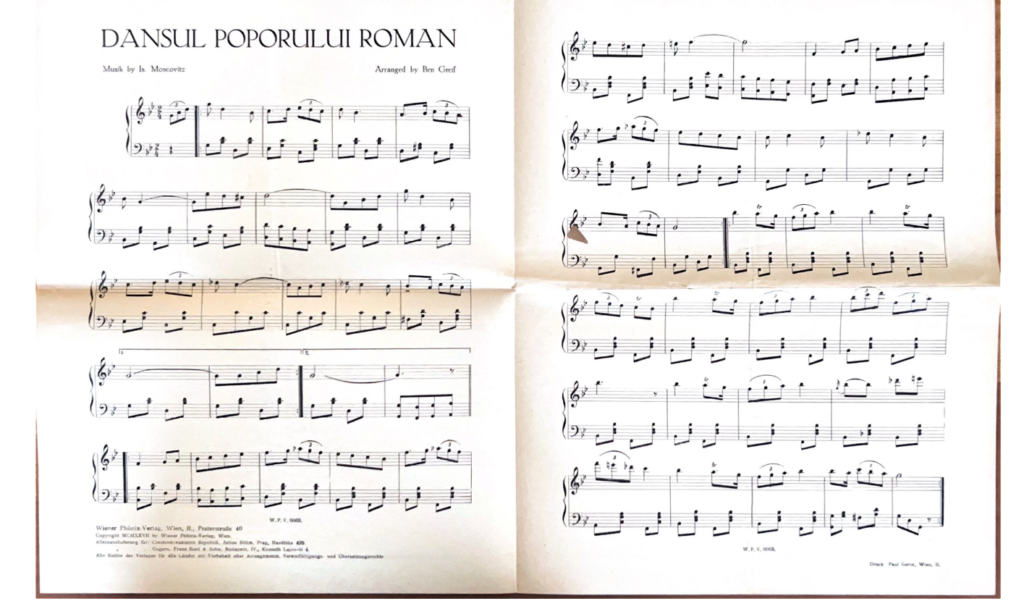
The unknown musician Isidore Moscovitz, who I wrote a blog post about before, is also in here with some of the same pieces he copyrighted with the LOC, including a published version I hadn’t seen before.
Some of the scores involve people Joseph recorded with, like his longtime pianist Max Yussim, who has an arrangement of Kol Nidre in here, or the well-known bandleader Alexander Olshanetsky (1892–1946) who Moskowitz recorded with in the late 1920s. There’s an arrangement by him of one of Moskowitz’s compositions, a waltz titled Salika.
Finally, I haven’t mentioned them yet, but there are 3 booklets containing 40 of Moskowitz’s compositions arranged for piano late in his life by a guy called Tony Charuha. They were clearly intended for publication. They are titled Rumanian Dances, Folk Dances, and Israeli Dances, although really this is just all Moskowitz’s typical Romanian-Jewish stuff he had been performing and composing for decades. We find a few of his greatest hits as well as many pieces which don’t appear anywhere else.
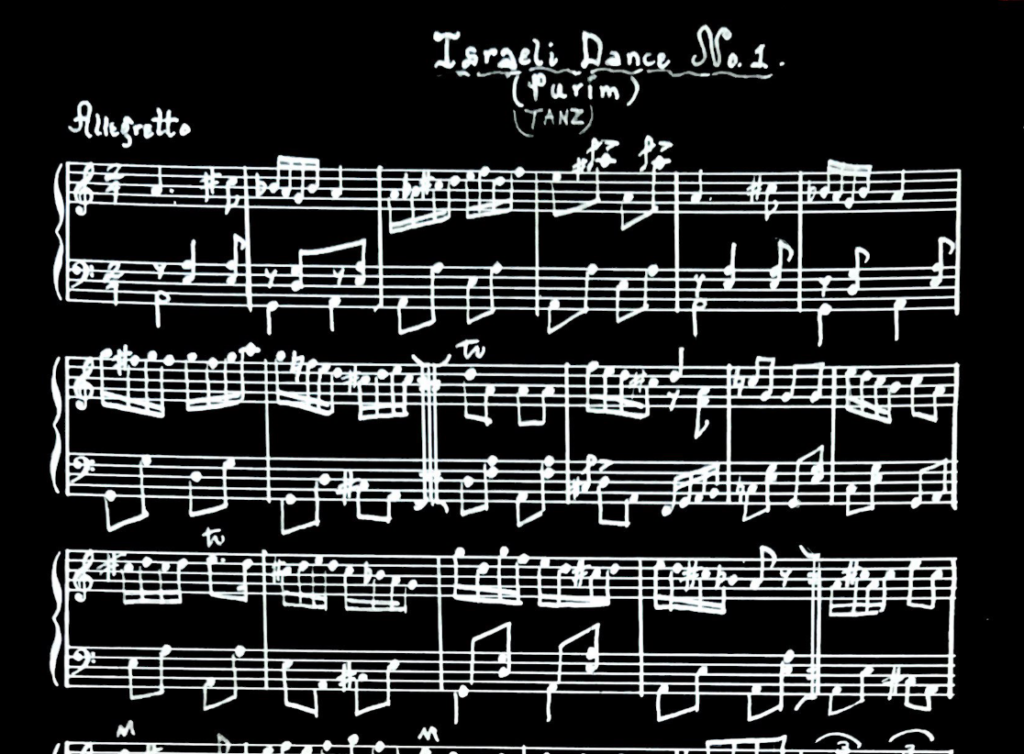
5. Even the corny restaurant music arrangements are fun
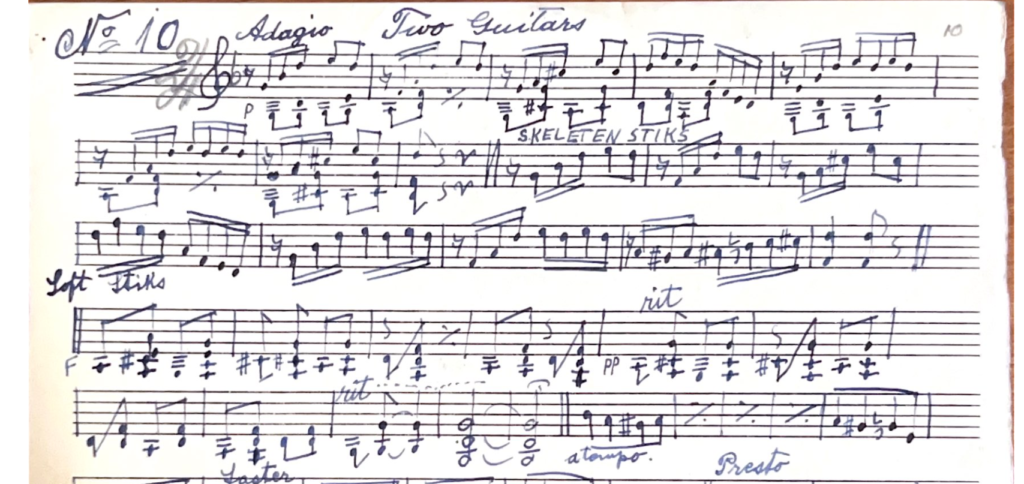
The last thing I wanted to mention is that a lot of the scores are his arrangements of popular or cosmopolitan pieces he was playing for a broader audience than Romanian-Jewish immigrants. This isn’t a surprise to anyone who has been listening to his old recordings for a while now; some of his best recordings are things like Operatic Rag and Argentine Dance (both from 1916).
His written arrangements here may be more interesting for cimbalom players like me, but I encourage people to take a look at them and try them out too. They contain Russian, American, German, etc. compositions which he was clearly having fun with while appealing to a broad audience.
Thanks for reading to the end, and feel free to tag me or get in touch if you end up performing or recording materials from this archive. I would love to hear about it.