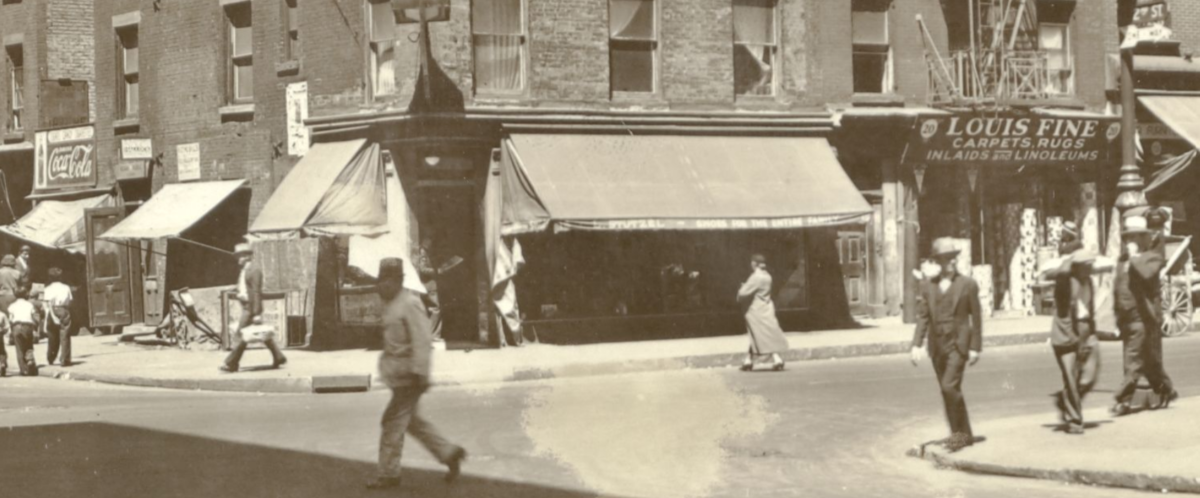
In June, I finished the last of a few klezmer-related projects and lectures, and decided to spend July and August researching a bit more aimlessly to see where it led me. I was looking at my database and got curious about how many of my old klezmer musicians and Progressive Musical Benevolent Society members lived along East 2nd Street in Manhattan. My earliest references were in the late 1890s, and my latest were in the 1940s, when a few stragglers like Naftule Brandwein still lived on the street. However, most of my references were during 1905–1925, during the peak of mass immigration, before many of these klezmorim moved out to Brooklyn, the Bronx, or elsewhere.
The area I’m thinking of is along the length of East 2nd Street, which is only 5½ blocks long, especially concentrated in the 100s-200s range. I also include addresses on adjacent streets (1st, 3rd, East Houston, Avenue A, etc.). A street which, I know, has had many other interesting eras of art, music and crime.
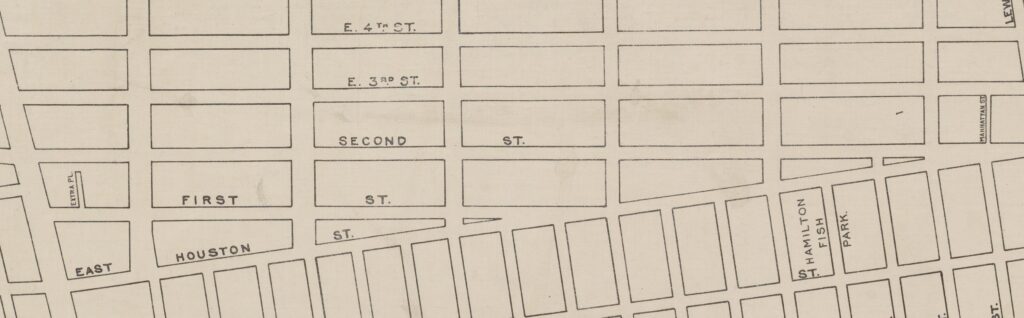
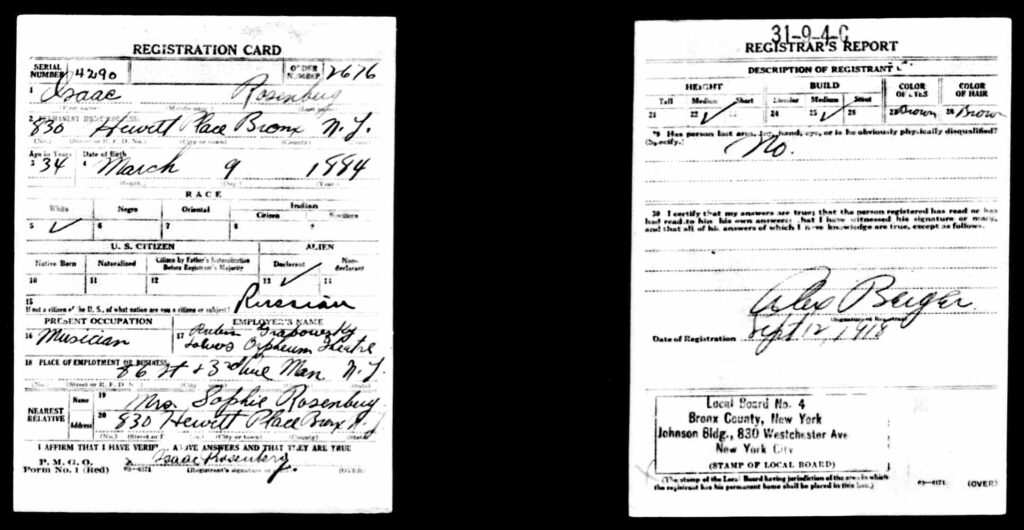
Since it’s not something I had been specifically looking for before, I spent a while browsing the 1905, 1910, 1915 and 1920 censuses along East 2nd to see which musicians were living there. (Salute to Gannett’s Census Maps tool which allows you to easily locate the pages for a particular block.) And then I searched my 1922-23 directory for AFM local 802, the earliest musician’s union directory I was able to find. For other people I had already noted their addresses from WWI conscription cards and so on.
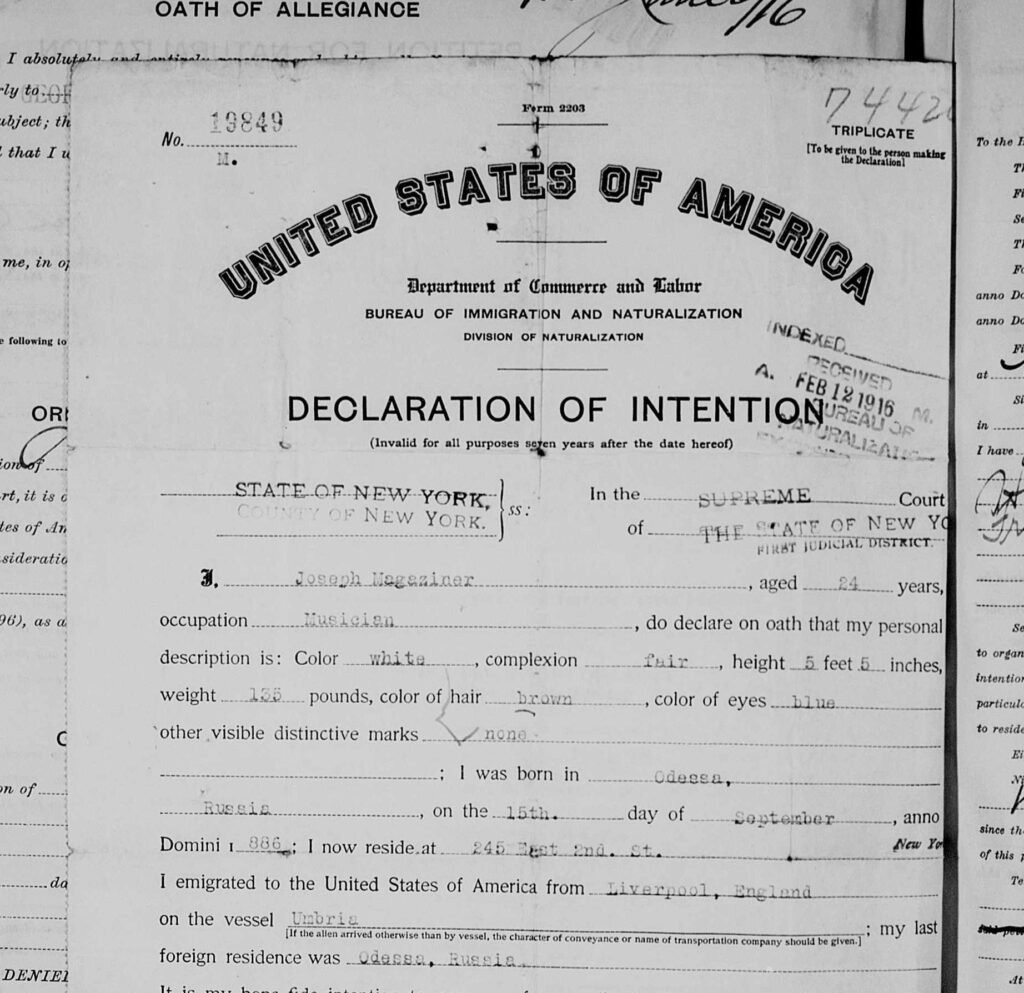
I wasn’t exhaustive in my searching, but I’m satisfied that I’ve collected a good sampling now. With that done, I’ve arrived at about 190 Jewish musicians living in that small area, of whom ~55 were Progressive Musical Benevolent Society members, or (with some overlap) ~45 people who I have loosely identified as klezmer musicians. For comparison, I’ve counted about 315 total New York klezmorim in my database so far—people who are documented as having played on old recordings, led Jewish bands, etc.—but I’m sure that’s far short of the real number.
Below, I’ll try to work through some of my observations. Apologies for the long post full of names and addresses!
Why Live Around There?
I’m not the first to write about East 2nd Street as an important spot in the old New York klezmer business. But I think the residence of klezmorim around this particular area hasn’t been explored. While some of them already lived around there at the turn of the century—they were scattered loosely all around the Lower East Side—they may have started to move closer together along that strip with the emergence of a Yiddish Theatre district around there in the years before World War I.
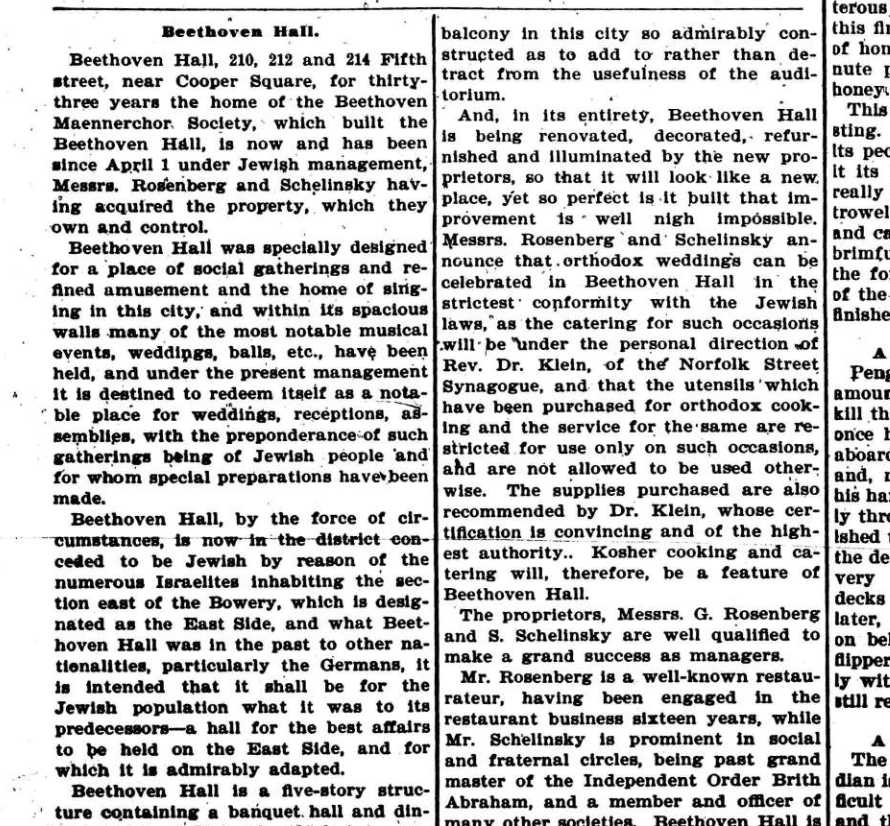
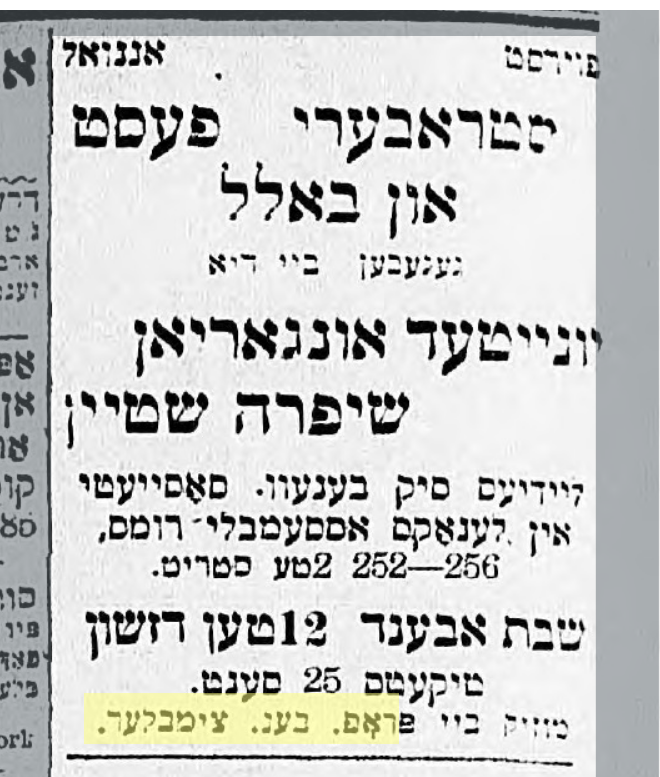
In addition to Yiddish theatres, a number of dance halls located on the street appear in old klezmer advertisements: New Renwick Hall at 193 E 2nd, Hennington Hall at 214 E 2nd, Lenox Assembly Hall at 252–56 E 2nd, and so on. Not far away was Beethoven Hall at 210 E 5th, where Dave Tarras, Abe Katzman, and many other played; so was Central Plaza Hall at 111 2nd Avenue, the Progress Casino at 23–30 Avenue A, and plenty of other small venues which came and went. In these halls, countless landsmanshaft banquets and dances took place, musical-literary soirées, union events, and weddings. As well, there were restaurants like Moskowitz & Lupowitz at 2nd Ave. at E 2nd Street, and other such now-forgotten establishments with live klezmer music.
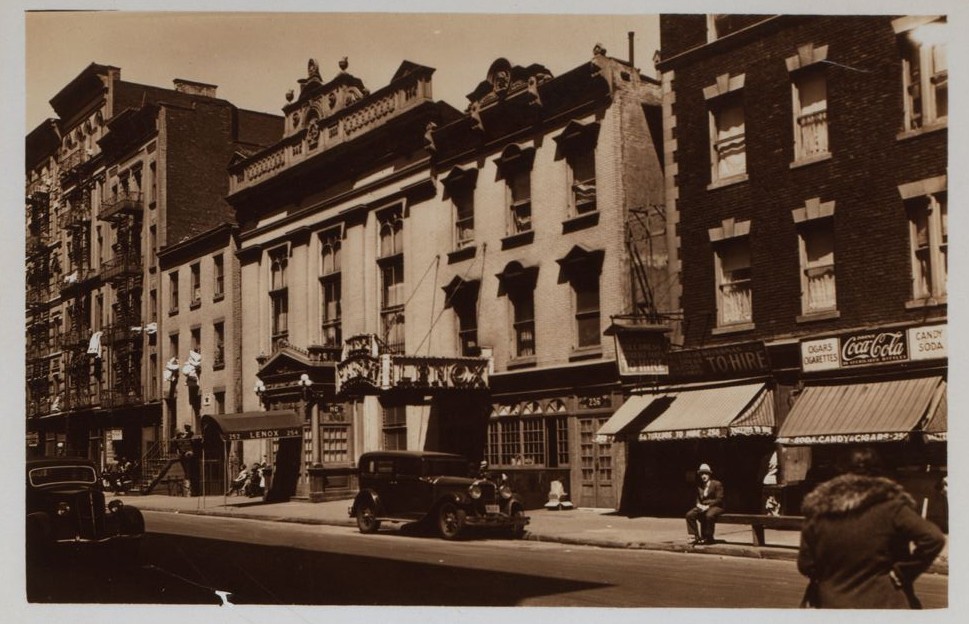
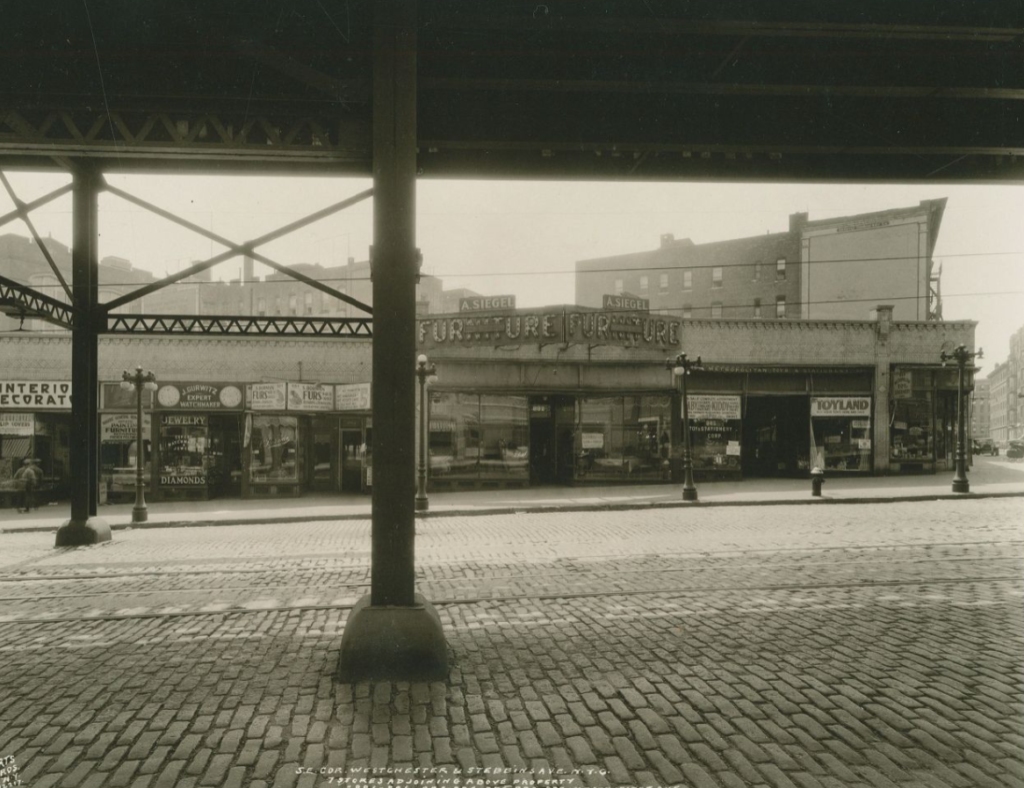
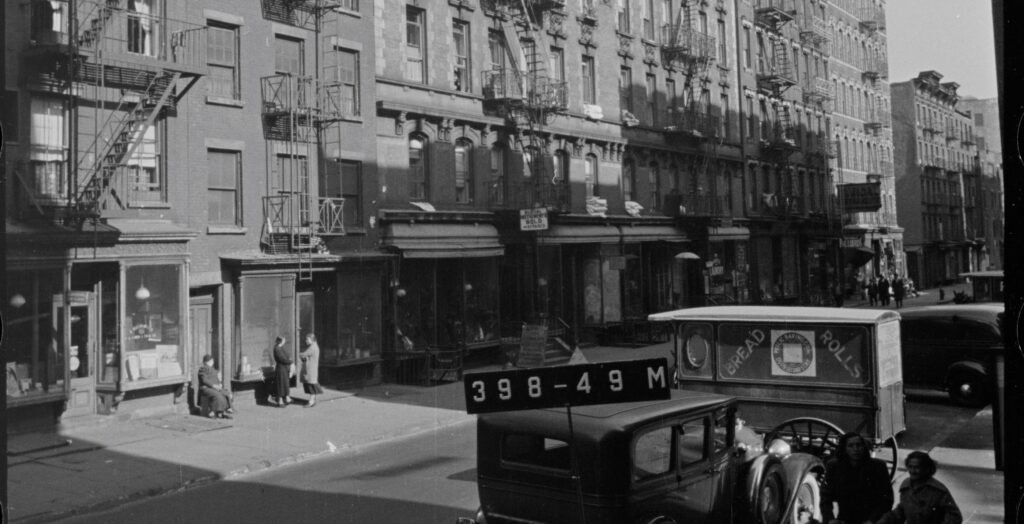
Lest I give the idea that it was a quaint musical quarter, it was a very rough area in the early decades of the 20th century, with plenty of extreme poverty and street level crime. The same factors that concentrated the Jewish population around here and allowed this cultural dynamism were also manifestations of discrimination and ghettoization. With that said, let me move on to how some klezmer ‘institutions’ moved into the area as this entertainment district took shape.
Organizations and Shops
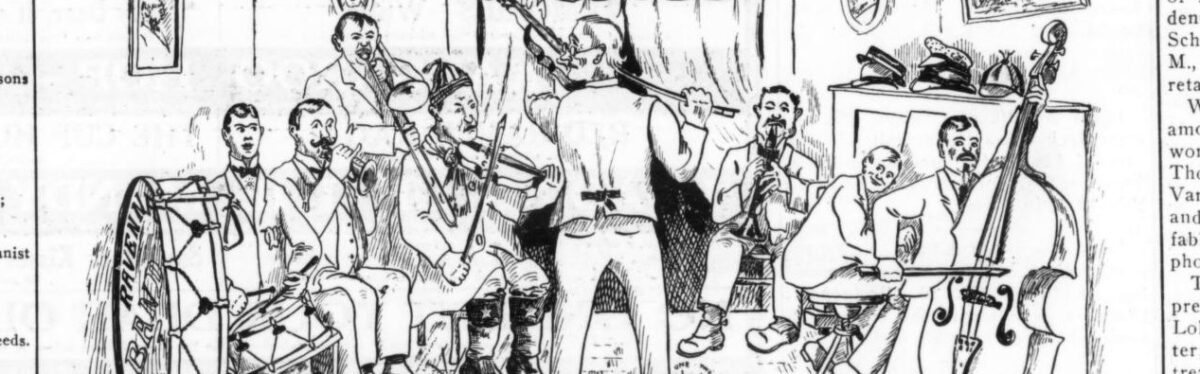
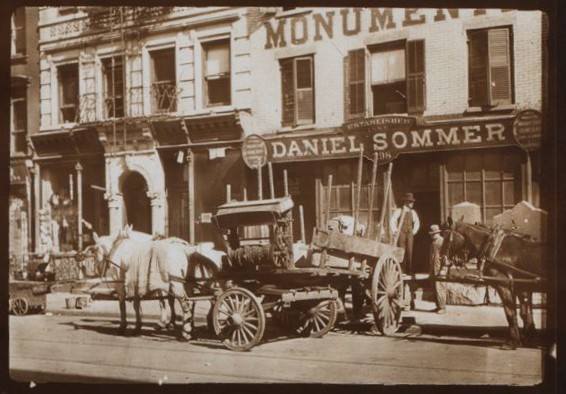
When the Russian Musical Progressive Union No. 1 was founded in 1889 under the United Hebrew Trades—the first communal organization of klezmer musicians in New York—its office was apparently on Grand Street, a 10 minute walk south of East 2nd. That union continued to exist in some form until the early 1920s, possibly as the Hebrew Theatrical Musical Club, another musician’s union within the UHT. But new klezmer institutions founded in the 1910s were located right on East 2nd. The Progressive Musical Benevolent Society, a mutual aid society for klezmorim which I’ve written several posts about now, opened an office on 193 E 2nd., as we can see from this 1919 directory below. I’m not sure how long it the office operated there, but I would guess until at least the 1940s.

Across the street from that office were two or more music stores run by klezmer families, Israel Evenchick‘s shop at 188 E 2nd and Shimele Blank‘s at 190 E 2nd. Blank and his sons were members of the P.M.B.S. while it is not clear if Evenchick was; he donated to the organization’s cemetery but was buried somewhere else. Both Joel Rubin and Henry Sapoznik, who interviewed old-timer klezmer musicians years later, heard that Blank’s store was a hub of klezmer activity:
In the late 1930s, for example, some of the younger Jewish musicians would meet on Saturdays at Shimele Blank’s Store at 190 East Second Street between Avenues A and B in order to pick up wedding engagements.
Joel Rubin, New York Klezmer in the Early Twentieth Century: The Music of Naftule Brandwein and Dave Tarras. University of Rochester Press, 2020, p.37.
There were also other, less formal networks of Jewish entertainment musicians in New York. Besides the ethnic-music stores like Shimele Blank’s, Ray Musiker remembered that during the depression, Hennington Hall at Avenue B and East 2nd Street also was an unofficial exchange hall on Saturday afternoons for Saturday evening jobs: “These musicians would meet, this was after shabes dinner…. I’d go to shul with my father… and then afterwards you’d take a walk across the [Williamsburg] bridge and get to Hennington Hall. And I’d see, there were like twenty-five, thirty musicians. would wait until the last minute to book each other, because I think they [could] buy the services cheaper. ‘Du vilst arbetn haynt bay nakht?” means, ‘You want to work tonight?”
Joel Rubin, p.42.
[Shimele] Blank’s small store, conveniently located across the street from the offices of the Progressive Musicians Benevolent Society, was a popular meeting place for members of the Jewish music world. Here, they would talk, book work, leave and retrieve messages, try out instruments, and play new music that had just come out. Like other music stores, Blank’s would occasionally publish music (sometimes Blank’s own compositions). Unlike Metro Music, his large neighbor to the west that catered to the general trade in records and sheet music, Blank’s clientele was strictly professional Jewish musicians.
Henry Sapoznik, Klezmer! Jewish Music from Old World to Our World. Schirmer Books, 1999, p.220.
These were not the only such music stores in New York, of course. There were others run by klezmorim and other immigrant Jews in the Lower East Side, Brownsville, and farther afield. Jan Peerce recalled another in his memoir:
Joseph P. Katz had a music store on East Broadway next to the Forverts Building. All the musicians on the Lower East Side–professionals, prospectives, and dreamers–used to buy their music, strings, rosin, and other needs there.
Jan Peerce with Alan Levy, The Bluebird of Happiness: The Memoirs of Jan Peerce. Harper & Row, 1976, p.50.
It seems to me that proximity to the Jewish entertainment district is a good explanation for why they first settled there, and after their shops and offices were located there it made even more sense for others to settle in the area. As the quotes indicate, even after many klezmorim had moved to other parts of New York, it was a place to return to to find work.
A Concentration of Klezmer Musicians
1900
Some of the forerunners to this trend were older musicians who would later join the P.M.B.S.; in the 1900 census we can find Harry Hoock (1866–1927), a Russian-born cornetist living at 205 E 2nd, and Jacob Biener (1861–1926), an Austrian-born flautist living at 185–87 E 2nd. Jacob Manishor (1865–1950), a klezmer cornetist born in Iași (but not a P.M.B.S. member), also settled at 128 East Houston after arriving in July 1900. Add to these musicians a handful of other Jewish immigrant musicians who I haven’t looked into in greater detail just yet.
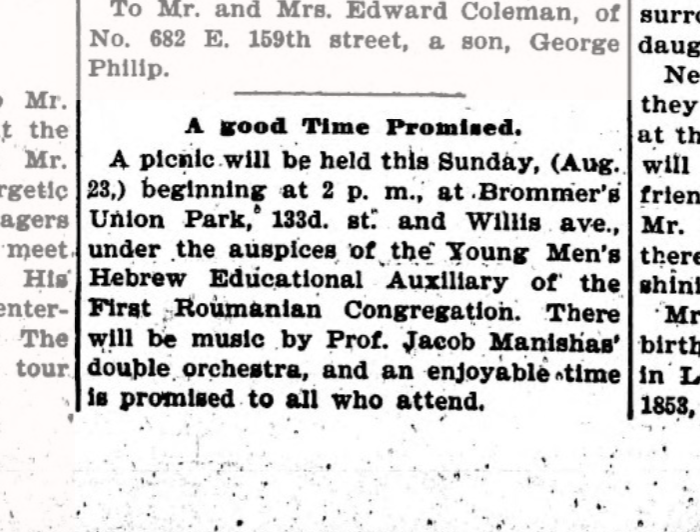
It doesn’t seem to me that this population was particularly concentrated here in these early years. And there were several large waves of immigration to come which would swell the numbers of klezmorim in New York. By the time of the 1910 census, some of these early residents had left; Manishor moved to Williamsburg and Biener to East 83rd St.; Hoock stayed in the area, living most of the rest of his life on East 4th St.
1905
In the middle of the oughts, the settlement of Jewish musicians apparently started to pick up in this area. Among the names I noticed are Benny Zimbler (1881–1925), an Austrian-born bandleader and violinist living at 346 East Houston; Philip Juvelier (1883–1956), an Odessa-born violinist and bandleader living at 48 E 1st; Benjamin Musicus (1883–1962), and a Russian-born violinist and future P.M.B.S. member living at 195 E 2nd. Jacob Faust (1849–1916), cornetist and son of the Faust klezmer family from Rohatyn, Galicia, also came in 1900 and was living at 8–10 Avenue B by the time of the 1905 census.
Hymie Millrad (1882–1971), notable klezmer bassist and also a future P.M.B.S. member, who I mentioned in my recent Moskowitz post, had recently arrived from Chernigov and settled at 58 E 3rd. Add to this many members of the Fiedel family of Bessarabian klezmorim who seem to have arrived between 1907 and 1912, and mostly settled along E 2nd.—for example, Max Fiedel (1884–1962), a trumpeter, was living at 183 E 2nd when he got married in 1907. Plenty of other immigrant Jewish musicians show up living around here during this period, including minor P.M.B.S. members and many others who I haven’t fully identified yet.
1910
The concentration of musicians here continued to increase by the time of the 1910 census. Naftule Brandwein (1884–1963), who had arrived in New York the year before, was living at 104 Pitt St, about a block from the eastern end of E 2nd. Sigmund Goldring (1888–1947), a violinist and Galician klezmer bandleader, was living at 2–4 Avenue B; Israel Evenchick (1864–1925), owner of the music store I mentioned above, was at 174 E 2nd; Samuel Frankfort (1888–1955), klezmer cornetist and bandleader from Khotyn was living at 9 Avenue B., and Joseph Magaziner (1886–1971), Odessa-born trombonist and bandleader was at 245 E 2nd. Some other musicians include Louis Weissman (1874–1926), a Podolia-born clarinetist and P.M.B.S. member living at 306 East Houston; brothers Abraham Rapfogel (1884–1956), violinist and I.J. Hochman associate, and Benjamin Rapfogel (1877–1960), bassist; both were Galician-born P.M.B.S. members and lived at 331 East Houston in 1910. Jacob Silber (1882–1952), a Lviv-born drummer and tsimbl player who would later play with Leibowitz, Tarras and others, lived at 5 Avenue B, and Herman S. Shapiro, whom many of us know from his turn of the century klezmer publications, lived at 72–74 2nd Avenue.
Louis Grupp (1888–1983) was in this era a young klezmer violinist, a nephew of Alter Chudnover who played in his band in Chudniv around the turn of the 20th century. He moved to the Lower East Side in 1907 and played a bit on the Jewish scene before getting into vaudeville, theatre, civic bands, etc. In 1910 he lived at 104–06 E 2nd along with his father Samuel (1860–1932), a flautist, and his brothers Jack (1893–1976) a cornetist, and David (1898–1975), a drummer. (According to Grupp, his brothers were studying music at this time and never got into playing Jewish jobs.) Another family of wedding musicians, the Reichels, lived in the same building: brothers Nathan (1880–1956), a trombonist born in Kyiv, and his brother Marcus (1870–1928). Both the Grupps and the Reichels would join the P.M.B.S. after it was founded in 1913.
Henry Sapzonik interviewed Grupp in the 1970s and was nice enough to share the recording with me. Louis doesn’t mention this area, but gives some great impressions of life at the time:
We came back nineteen seven… as far as I can recall a lot of Jewish people at that time, nineteen seven, came to this country from all over the world. And every town, people came, girls, young fellas. And we all stuck together, all the landsleit, that is the countrymen that came here, at that time: some families, single girls, single fellas, but we all stuck together. In fact my mother, on Sunday she never cooked, because one could never tell who’s coming. Sometimes there used to come maybe fifteen or twenty people, unexpected, and it’s like one family, because we knew one another from Europe, we all grew up together. And we tried to stay that way. So in order to feed ’em she didn’t cook, so she can go down and buy corned beef, pastrami, salami, and she had a little leftover chicken, and everybody grabbed, and… This was like a party. And that kept up for a number of years. […]
My father used to get the jobs, like we called it, and I and him–my younger brothers didn’t play, they studied music, and…–used to engage two or three more men and go and play the wedding. And from that wedding, someone recommended another wedding, and that’s how we got along, along… only a few years. And as I said before, as far as I’m concerned, that’s what my father did all along. As far as I’m concerned, I started to drift away, […] In that, I got my little experience, I used to play for Pollaks and for Italians and for Greeks and for Turks and for Jews and for anything and everything. […]
There was a lot of [klezmer spielers]. See, every landsleit, every musician who had landsmen became a leader. When these landsmen had weddings or whatever he ever had, he played, he used to go and hired, he knew who to hire–they used to stick around together, before the union, before they joined the union, they used to help one another. One used to play for the other, if he had a wedding, I played for him, when I had a wedding, he played for me. And they used to manage to make a poor living, get by.
Louis Grupp, interviewed by Henry Sapoznik, 1970s.
Other interesting characters living around here in the 1910 census are too numerous to mention. One I’m curious to learn more about is Isaac Tresser (1878–1941), a violinist born in Piotrkowice, Galicia. He was living at 82 E 1st in this census and lived most of the rest of his life around this little area. He joined the P.M.B.S. when it was founded and for some reason acted as guarantor on the naturalization applications of many other klezmorim, including most notably Max Leibowitz.
1915 and WWI draft cards
By the time of the 1915 New York Census and World War I draft cards from 1917–8, I think we have entered the peak period of klezmer residency around here. By now, the P.M.B.S. had been founded and most likely had already opened its office at 193 E 2nd. And most buildings in the 100s and 200s range of E 2nd seem to have had some Jewish musicians living in them.
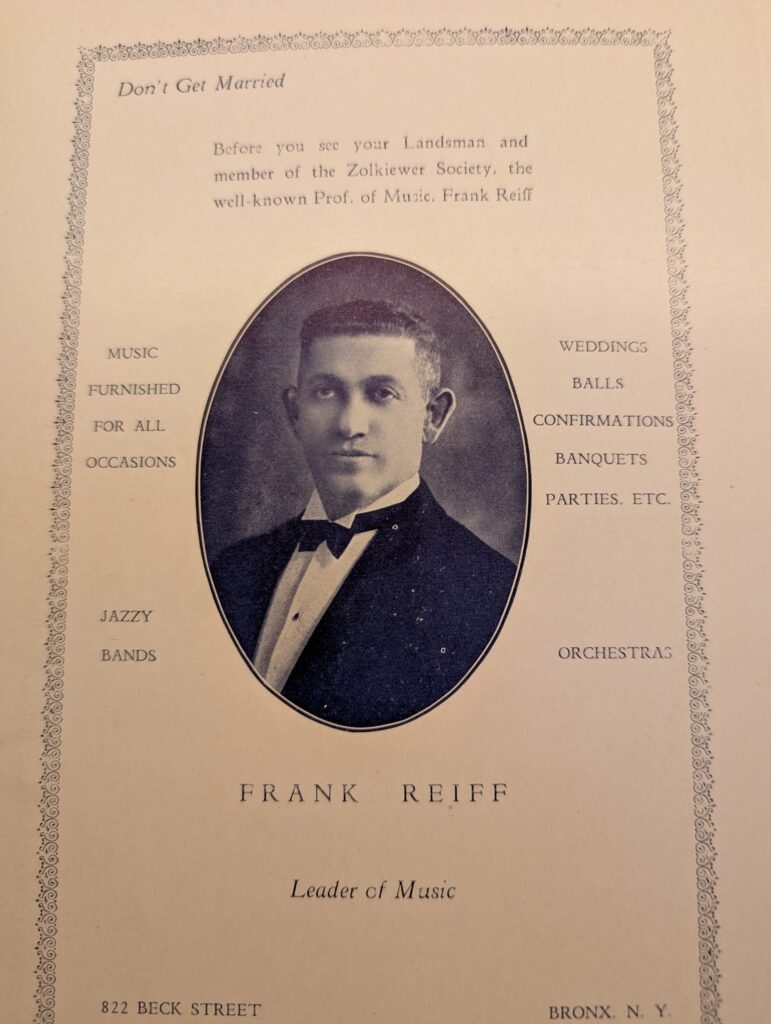
Among the new arrivals are Morris Sherman (1858–1823), a violinist from Kyiv, who came with his musician sons Benjamin (1888–1950), clarinetist and barber, and Louis (1894–19??), violinist, in 1911 and settled at 264 E 2nd. The Reichels, who I mentioned above, also lived in this building. Harry Pressalsky (1886–1974), a drummer born in Zamość, became a P.M.B.S. member and settled at 190 E 2nd, above Evenchick’s shop. Hirsch Gross (1885–1935), Galician-born violinist and later leader of the Boiberiker Kapelle, lived at 160 Ridge St., while Frank Reiff (1879–1960), a drummer born in Żółkiew, Galicia who had arrived in 1905, moved up here during WWI and lived at 185–87 E 2nd for about a decade. Reiff arranged some klezmer scores for publication, and in later years was a bandleader specializing in music from his home region.
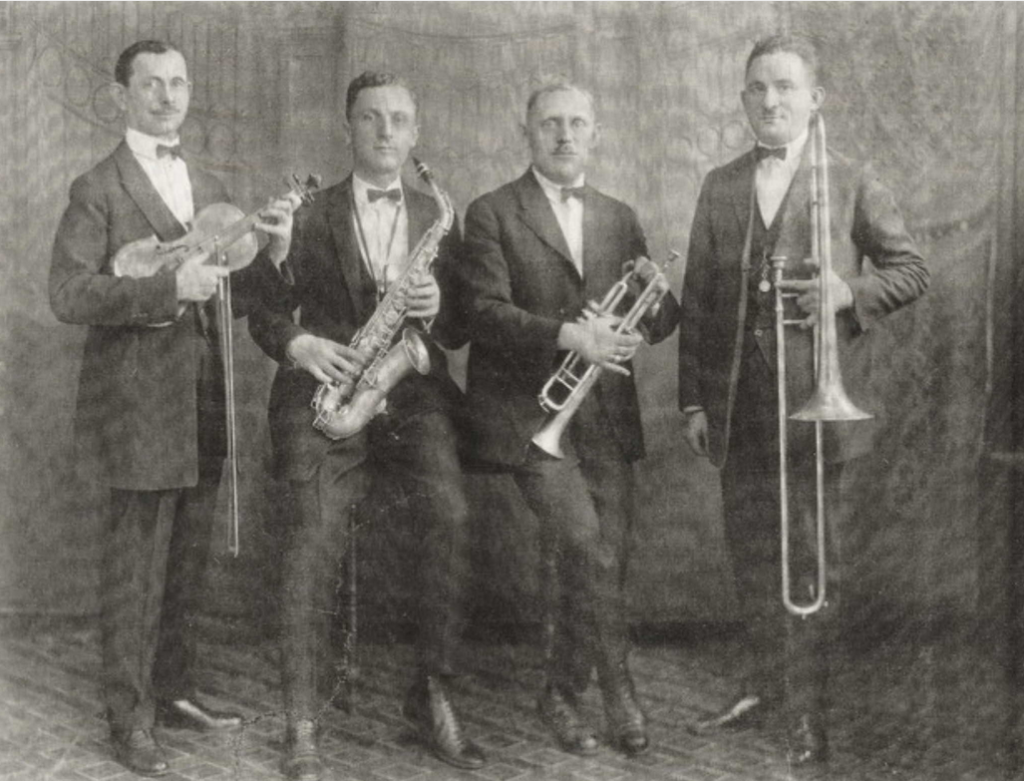
The Ger(e)nsteins, musicians who were from Dave Tarras’s hometown Teplyk, also arrived and settled here: Jack Gernstein (1873–1952), a drummer and possibly also violinist, arrived in 1909 and was living at 108–10 E 2nd, as was his brother Alex Gernstein (1881–1963), a trombonist and bandleader who initially arrived in Philadelphia in 1911. (Alex was called as a witness in Max Leibowitz’s lawsuit against Columbia and Naftule Brandwein, which is how we know he had hired Leibowitz in his band during this era.)
Numerous other P.M.B.S. musicians were also living around here during these dynamic early years of the organization. Shlumke “Sam” Beckerman (1884–1984), celebrity clarinetist, lived at 46 Avenue B, while Morris Rothfarb (1881–1927), a trumpeter and fellow member born in Volhynia, lived a few doors down at 78 Avenue B.
1920
The 1920 census lists many of these same musicians still living around here, especially right on E 2nd Street. By now, most of the notable figures had already arrived, although some continued to show up, like Aaron Greenspan (1881–1938), a trumpeter from Briceni who arrived in early 1920 and settled in the same building as some of the Fiedels, at 181 E 2nd. Like the Fiedels, he would come to specialize in Bessarabian klezmer, as I described in this post about music and Britshaner landsmanshaftn. Alexander Olshanetsky (1892–1946), who led dance orchestras in addition to being a composer and prolific Yiddish theatre figure, arrived in 1922 and initially settled at 60 2nd Avenue.
It seems to me that few of the late-arrival klezmorim felt the need to settle here, as by this time some of the 1910s residents were already moving out to other parts of New York. For example, Dave Tarras (1895–1989) and Al Glaser (1898–1982) arrived in 1921 and 1922, respectively, and both settled in Brooklyn.
Moving Out
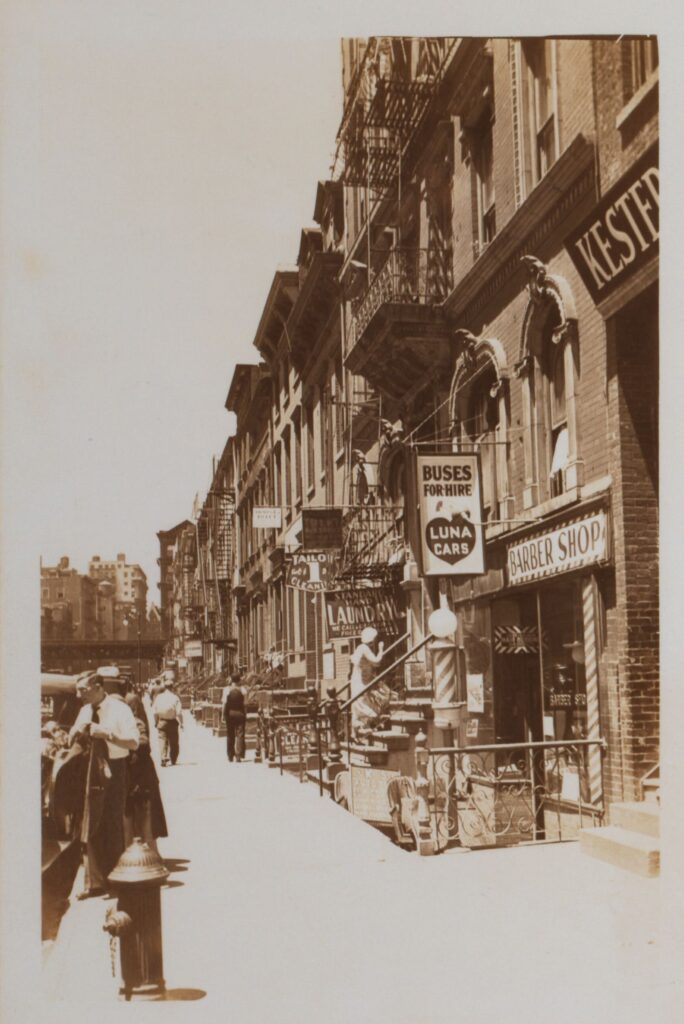
Increased prosperity and up-and-coming Jewish neighborhoods around New York after WWI enabled many of the above musicians to start moving out of the Lower East Side and into Brooklyn, the Bronx, and elsewhere in Manhattan. My friend and fellow research Eve Sicular also thought the opening of new subway lines made it easier for them to live farther away from this entertainment district. Sigmund Goldring and Jacob Manishor moved to Williamsburg in the early 1920s, while Samuel Frankfort moved to Brownsville, Alex Gernstein to New Lots, and Louis Grupp to Midwood. Philip Juvelier, Benjamin Rapfogel, Aaron Greenspan, Frank Reiff, Jacob and Max Fiedel, and many others moved to the Bronx.
Some stayed longer in the area, such as the Evenchicks and Blanks who were running their shops on the street. But this process of moving out continued throughout the 1920s, to that by the onset of the Great Depression, many had finally left. Among those who only moved out by 1930 were Hymie Millrad, who moved to Williamsburg; Alex Fiedel who left for Queens, and Harry Pressalsky to the Bronx.
Non-Klezmer Musicians
In the census and the 1922 local 802 directory, plenty of Italian musicians lived in this little area, and a handful of German, Hungarian, and Polish musicians. I didn’t add them to my tally unless I was already interested in them for some other reason, but there are a few characters worth mentioning.
Pawlo Humeniuk (1883–1965) the celebrity Ukrainian-American fiddler, lived at 162 E 2nd in 1910 and then at 155 E 2nd until the late 1930s, after which he relocated to Queens. Aside from being a wedding musician and recording artist, he was a violin maker. Here’s a fascinating piece about him by Spottswood (originally printed in Musical Traditions, Spring 1992 edition.)
The Borsodys, who were Jewish but not klezmer musicians, lived at 312 East Houston in the 1900 census. At that time Morris Borsody (1874–1942) a Hungarian-born violinist, was the only musician of the family, but his children Helen (1895–1975) and Emil (1899–19??) would become cimbalom and cello players later in life. I discussed Helen a bit in this post, along with Julius Kessler (1884–1964), also a Jewish Hungarian-born cimbalom player, and his brother Harry (1882–19??), who were teenaged musicians living at 233 E 2nd in 1900. Another cimbalist and bassist Harry Sacher (1888–19??), born in Dobromil, Galicia, lived at 165–7 E 2nd in the 1910 census. He was Jewish, but performed with classical orchestras and other such music; I’m not sure how much klezmer he played. He made a few recordings with Edison in 1925; here is one.
Some klezmorim never lived around there
Plenty of old New York klezmorim who you might know from historical recordings never lived around E 2nd, either because they were wealthy enough to live in a nicer area, or because they settled in Brooklyn or elsewhere. Abe Elenkrig (1880–1965), the first bandleader to make a klezmer recording in the US in 1913, lived in Brooklyn after arriving in 1906, as did Beresh Katz (1879–1964), Galician violinist and future leader in the Boiberiker Kapelle. Max Leibowitz (1884–1942) lived at various addresses farther south in the Lower East Side during this era, as did fellow Romanian klezmer recording artists Abe Schwartz (1881–1963), Max Yankowitz (1875–1945), and Joseph Moskowitz (1879–1954). Abe Katzman (1868–1940) briefly lived in the Bowery after arriving in the late 1890s, but soon moved uptown and later to Brooklyn. Israel J. Hochman (1872–1940) arrived in 1906 and briefly lived to the north of this area on E 6th and then E 8th before moving to the Bronx, where he lived the rest of his life. Joseph Frankel (1882–1956) settled on E 96th after arriving in New York in 1904. And as I mentioned above, Dave Tarras and Al Glaser both settled in Brooklyn upon arriving in 1921–22 and don’t seem to have ever lived around East 2nd.
Conclusion
Thanks for walking with me through this mess of information. Although this kind of urban history is a bit outside my usual approach, I think it gives me new insights as I work on my larger project about the old New York klezmer economy, and the trajectory of the many musicians and families involved in it. I see this moment of concentrated settlement around one small area as one of a few moments like this in New York klezmer history, which I have yet to fully explore. I suspect there were others in different areas, as I often find a cluster of klezmer colleagues living together in other eras in parts of Brooklyn or the Bronx, although perhaps nothing on the scale of this district in its heyday.
There’s also the connection to the Progressive Musical Benevolent Society; its members seemed to be especially concentrated around here during the first decade of its existence. Maybe half of the klezmer musicians living around E 2nd were members or linked to the Society in some way. As many of them had already moved into the area when it was founded in around 1913, I think the location of the office followed the people, rather than the other way around. Another thing for me to think about.
In the meantime I will keep my eyes open for a mention of this in an old memoir or newspaper article: “In 1915, we all lived on this street, because…”